Entrepreneur · United States
Mark Zuckerberg
Mark Zuckerberg is an American entrepreneur, computer programmer, and technology executive best known as the co-founder of Facebook and the founder, chairman, and CEO of Meta Platforms. Born on May 14, 1984, in White Plains, New York, he launched Facebook in 2004 while studying at Harvard University. The platform grew into one of the world's most influential social networks and later became part of Meta, the company behind Facebook, Instagram, WhatsApp, and Threads. Zuckerberg is also known for his work in artificial intelligence, virtual and augmented reality, and philanthropy through the Chan Zuckerberg Initiative.
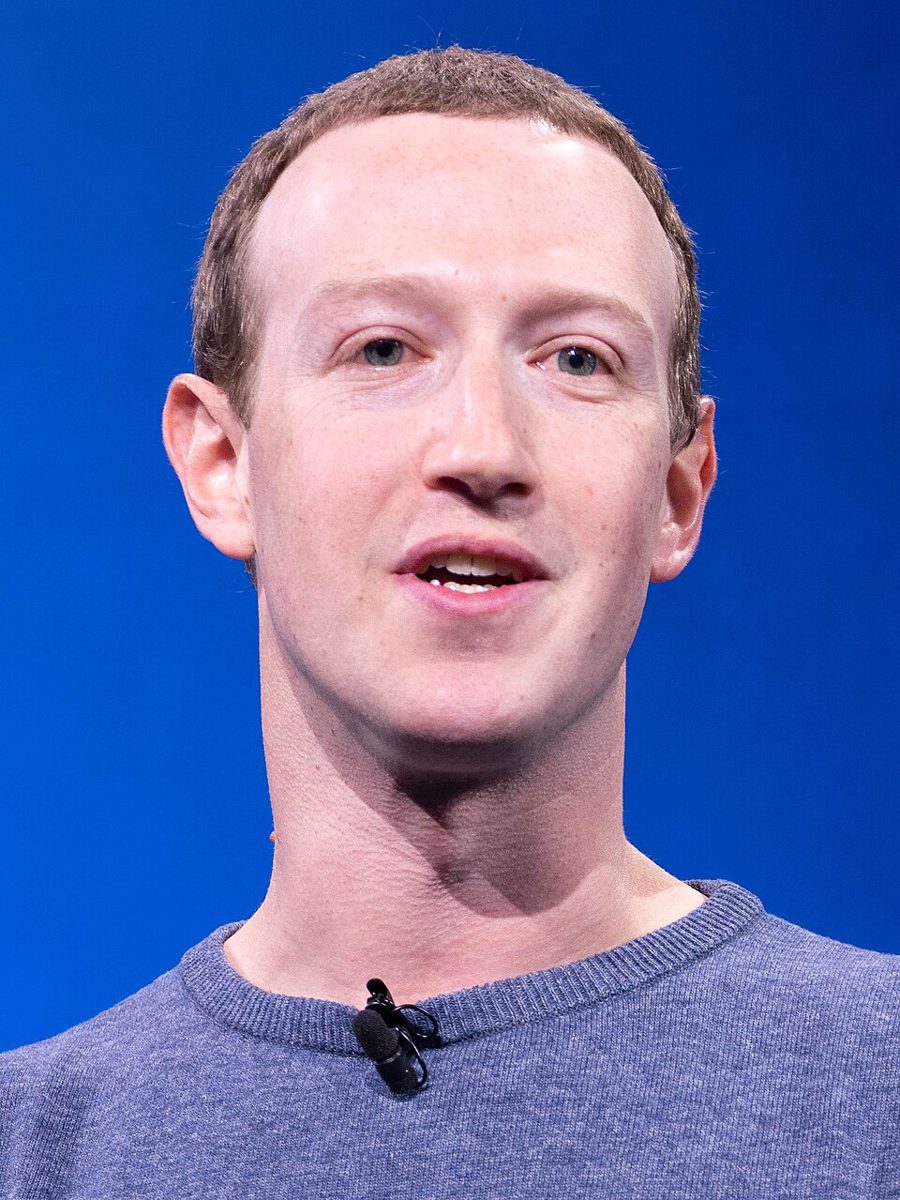 Wikimedia Commons
Mark Zuckerberg: Full Biography, Career, Achievements, and Legacy
Biography
1. Introduction
Mark Elliot Zuckerberg is an American entrepreneur, computer programmer, and technology executive who co-founded Facebook, one of the most influential social networking platforms in the world. As the founder, chairman, and chief executive officer of Meta Platforms, he has played a major role in shaping online communication, digital advertising, and social media.
Zuckerberg became widely known after launching Facebook as a college student in 2004. What began as a university networking website developed into a global technology business encompassing Facebook, Instagram, WhatsApp, Messenger, and Threads.
His career has also included major investments in artificial intelligence, virtual reality, augmented reality, and wearable technology. Alongside his business activities, he and his wife, Priscilla Chan, established the Chan Zuckerberg Initiative to support work in science, education, and community development.
2. Early Life and Family Background
Mark Elliot Zuckerberg was born on May 14, 1984, in White Plains, New York, United States. He grew up in Dobbs Ferry, a village in Westchester County, in a family that encouraged education and intellectual curiosity.
His father, Edward Zuckerberg, worked as a dentist, while his mother, Karen Kempner, worked as a psychiatrist. Mark has three sisters: Randi, Donna, and Arielle.
From an early age, Zuckerberg showed an interest in computers and programming. His family supported his curiosity, and he received computer instruction while still young. He began experimenting with software and developing programs that helped him understand how computers could facilitate communication and solve practical problems.
These early experiences laid the foundation for his later work in social networking and technology.
3. Education and Early Programming Projects
Zuckerberg attended Ardsley High School before transferring to Phillips Exeter Academy in New Hampshire. At Exeter, he continued exploring computer programming and also participated in extracurricular activities, including fencing.
While still in high school, he developed a music recommendation program called Synapse. The software used information about listening preferences to suggest music, attracting interest from technology companies.
In 2002, Zuckerberg enrolled at Harvard University, where he studied computer science and psychology. He became involved in student life and began developing online projects that attracted attention among fellow students.
Although Harvard provided an academic environment for his early work, the rapid growth of Facebook eventually led him to leave university before completing his degree. His decision allowed him to concentrate on developing the company full-time.
4. The Creation of Facebook
In February 2004, Zuckerberg launched a website initially called TheFacebook while studying at Harvard. The project was developed with contributions from fellow students and collaborators, including Eduardo Saverin, Dustin Moskovitz, Andrew McCollum, and Chris Hughes.
The website initially served Harvard students, allowing them to create profiles, connect with classmates, and share information. Its popularity grew quickly, and access expanded to other colleges and universities.
In 2004, Zuckerberg and his team moved the business to Palo Alto, California, to focus on expanding the platform. In 2005, the company dropped “The” from its name and became Facebook.
Facebook subsequently opened registration to a much wider audience, helping it develop into a major global social network. Features such as profiles, the News Feed, groups, photo sharing, and messaging encouraged users to maintain connections and interact online.
Zuckerberg's role in the company's early development made him one of the most prominent young entrepreneurs in the technology industry.
5. Growth into a Global Technology Company
Facebook expanded rapidly during the second half of the 2000s and the 2010s. The platform became a major destination for personal communication, community groups, business pages, advertising, and online content.
The company introduced and developed tools that enabled businesses to reach audiences through targeted advertising. Its growing user base and advertising systems helped establish Facebook as a major force in the digital economy.
In May 2012, Facebook became a publicly traded company through its initial public offering. Zuckerberg remained a central leader, overseeing product direction and long-term strategy.
As the business grew, it expanded beyond its original social networking service through acquisitions and new products. Its strategy increasingly focused on mobile communication, visual content, messaging, and new forms of digital interaction.
This expansion helped transform Facebook from a single social network into a broader technology company.
6. Instagram, WhatsApp, and Other Platforms
One of the most important developments in Facebook's expansion was its acquisition of Instagram in 2012. Instagram grew into a major platform for photo and video sharing, creators, businesses, and digital advertising.
In 2014, Facebook announced its acquisition of WhatsApp, a messaging service used by people around the world. WhatsApp expanded the company's presence in private messaging and communication.
Facebook also developed Messenger into a separate messaging product and later introduced additional services to support creators, businesses, and online communities.
In 2023, Meta launched Threads, a text-oriented social platform connected to the broader Instagram ecosystem.
These services operate in different ways, but together they form a major part of Meta's family of applications. Their scale has given Zuckerberg significant influence over how people communicate, distribute content, and conduct business online.
7. Facebook Becomes Meta
In October 2021, Zuckerberg announced that Facebook's parent company would change its corporate name to Meta Platforms. The Facebook social network retained its name, but the corporate rebranding reflected a broader focus on immersive digital experiences and the metaverse.
The metaverse concept involves interconnected digital environments in which people may interact through avatars, virtual spaces, and immersive technologies. Meta's work in this area includes virtual reality headsets, augmented reality research, and digital communication tools.
The company also invested heavily in Reality Labs, its division responsible for virtual reality, augmented reality, and related hardware and software.
These investments represented a long-term strategic shift beyond traditional social networking. They also involved substantial costs and uncertainty, as adoption of immersive technologies has developed differently from the company's established social media businesses.
8. Artificial Intelligence and Emerging Technology
Artificial intelligence has become a major focus of Zuckerberg's technology strategy. Meta has invested in AI research, computing infrastructure, large language models, recommendation systems, and AI-powered features across its applications.
The company's AI work supports functions such as content recommendations, advertising systems, automated moderation tools, creative assistance, and conversational AI products.
Meta has also released AI models and tools intended for developers and researchers, including models in its Llama family. The company has pursued AI assistants and creative tools that can operate within its wider product ecosystem.
Zuckerberg has described advanced AI as an important part of Meta's future. Developing these technologies requires extensive computing resources, skilled researchers, and ongoing investment.
At the same time, the use of AI raises questions involving privacy, accuracy, copyright, employment, security, and the effects of automated systems on society. These issues remain important considerations for Meta and the wider technology industry.
9. Leadership Style and Business Strategy
Zuckerberg's leadership has been closely associated with product development, rapid experimentation, and long-term technology investment. He has often emphasized the importance of building products that reach large audiences and can evolve through continuous improvements.
As CEO, he has retained substantial influence over Meta's direction and governance. His position as founder and controlling shareholder gives him significant authority over important company decisions.
Meta's business model relies heavily on digital advertising across its applications. Advertising revenue supports its operations and funds investments in emerging technologies.
Zuckerberg's strategic decisions have sometimes attracted criticism, particularly when the company has faced questions about content moderation, data privacy, competition, platform safety, and the financial cost of new technology initiatives.
His leadership therefore illustrates both the opportunities associated with building global digital platforms and the responsibilities that accompany their influence.
10. Personal Life and Marriage
Zuckerberg met Priscilla Chan while studying at Harvard University. Chan later became a pediatrician and philanthropist. The couple married in May 2012.
They have three daughters: Maxima, commonly known as Max, born in 2015; August, born in 2017; and Aurelia, born in 2023.
Although Zuckerberg's professional life receives extensive public attention, he generally keeps many details of his family's private life away from the spotlight. He occasionally shares family moments and personal interests through social media.
His interests outside work have included exercise, learning new skills, and exploring technology. His public image has evolved over time from that of a young college programmer to a business leader responsible for a large international organization.
11. Chan Zuckerberg Initiative and Philanthropy
In 2015, Zuckerberg and Priscilla Chan announced the creation of the Chan Zuckerberg Initiative, a philanthropic organization focused on advancing human potential and promoting equal opportunity.
The initiative supports work in areas including scientific research, education, community development, and efforts to improve health outcomes.
One of its major areas of interest is biomedical science. Through funding and partnerships, the organization has supported research aimed at understanding disease and developing tools that can accelerate scientific discovery.
Its education-related work has included support for personalized learning and efforts to improve educational opportunities. The initiative has also funded community organizations and projects addressing social and economic challenges.
Zuckerberg and Chan have publicly discussed their intention to direct substantial resources toward philanthropy over time. Their approach combines charitable giving with longer-term investments intended to support research and institutional development.
12. Wealth and Business Interests
Zuckerberg's wealth comes primarily from his ownership of Meta Platforms. Because he holds a significant equity stake in the company, his net worth can change considerably as Meta's share price rises or falls.
Meta's advertising business, global user base, and investments in new technologies have played important roles in the company's market value. Zuckerberg's financial position has consequently been closely connected to the company's business performance and investor expectations.
He has also been associated with investments in technology, land, and other private assets. However, public estimates of personal wealth vary by source and date, and private assets may be difficult to value precisely.
Zuckerberg's financial success has made him one of the most prominent figures in the technology industry, while also drawing attention to questions about the concentration of wealth and corporate power.
13. Awards and Recognition
Zuckerberg has received extensive recognition for his role in developing Facebook and leading Meta. His achievements have been acknowledged through business awards, media coverage, and inclusion in lists of influential people.
Notable aspects of his career include:
- Co-founding Facebook in 2004.
- Building a social networking service used by billions of people.
- Leading the development of Meta Platforms as a global technology company.
- Expanding the company's business through Instagram, WhatsApp, Messenger, and Threads.
- Supporting research and product development in artificial intelligence.
- Investing in virtual reality, augmented reality, and wearable technology.
- Establishing the Chan Zuckerberg Initiative with Priscilla Chan.
- Influencing online communication, digital advertising, and the broader technology sector.
His career has also been marked by significant public scrutiny, regulatory challenges, and debates about the responsibilities of major technology platforms.
14. Controversies and Public Challenges
As Facebook and Meta expanded, the company faced criticism and regulatory scrutiny involving user privacy, personal data, content moderation, misinformation, competition, and the effects of social media on young people.
The Cambridge Analytica controversy brought widespread attention to the collection and use of Facebook user data. The episode intensified public debate over how social media companies manage personal information and protect user privacy.
Meta has also faced questions about how its platforms respond to harmful content, online manipulation, and misinformation. Researchers, lawmakers, advocacy organizations, and company representatives have sometimes disagreed about the causes, scale, and appropriate solutions to these problems.
The company's investment in the metaverse and other emerging technologies has drawn debate over costs, commercial prospects, and the allocation of resources.
Zuckerberg has appeared before lawmakers and publicly discussed changes to the company's policies and systems. These challenges have become an important part of his leadership history and reflect broader questions about accountability in the technology industry.
15. Influence on Modern Communication
Zuckerberg's work has significantly influenced how people communicate online. Facebook helped popularize digital profiles, social feeds, online communities, and social connections at a global scale.
Instagram changed how users share visual content and how businesses and creators interact with audiences. WhatsApp became an important communication tool for individuals, families, communities, and businesses across many countries.
These services have created opportunities for connection, commerce, creativity, and information sharing. They have also changed advertising, news distribution, and the relationship between users and digital platforms.
Because Meta's applications reach such a large audience, decisions about their design and policies can have consequences far beyond the company itself.
16. Legacy and Future Outlook
Mark Zuckerberg's legacy is closely tied to the growth of social networking and the rise of large technology platforms. His work transformed a university project into a global business that plays a major role in communication, advertising, and digital services.
His continued investment in artificial intelligence, virtual reality, augmented reality, and wearable technology reflects an effort to shape the next generation of digital experiences.
The long-term results of these investments remain uncertain. Their significance will depend on technological progress, user adoption, business performance, and how effectively concerns about privacy, safety, and responsible innovation are addressed.
Zuckerberg's career is therefore both a story of entrepreneurial achievement and a case study in the opportunities and challenges that accompany large-scale technological influence.
17. Conclusion
Mark Zuckerberg rose from a computer enthusiast and Harvard student to become one of the most influential technology executives in the world. Through Facebook and Meta, he helped reshape online communication and build a global ecosystem of social media and messaging platforms.
His career has expanded into artificial intelligence, immersive technology, and philanthropy, while his leadership has also been challenged by controversies involving privacy, platform safety, and corporate responsibility.
Whether viewed through entrepreneurship, technology, or philanthropy, Zuckerberg's story illustrates how digital products can transform society—and how the leaders behind them must navigate the responsibilities that come with global influence.
Did you know?
- Mark Zuckerberg launched Facebook in February 2004 while studying at Harvard University. - He developed an interest in computer programming during childhood and created an early messaging program called Zucknet. - His high-school music recommendation project, Synapse, attracted interest from technology companies. - Zuckerberg left Harvard before completing his degree to focus on Facebook. - Facebook acquired Instagram in 2012 and announced its acquisition of WhatsApp in 2014. - In October 2021, Facebook's parent company changed its name to Meta Platforms. - Zuckerberg and Priscilla Chan established the Chan Zuckerberg Initiative in 2015. - Meta has invested heavily in artificial intelligence, virtual reality, and augmented reality. - Zuckerberg is a father of three daughters: Maxima, August, and Aurelia. - He remains Meta's founder, chairman, and CEO.