Activist · United States
Malcolm X
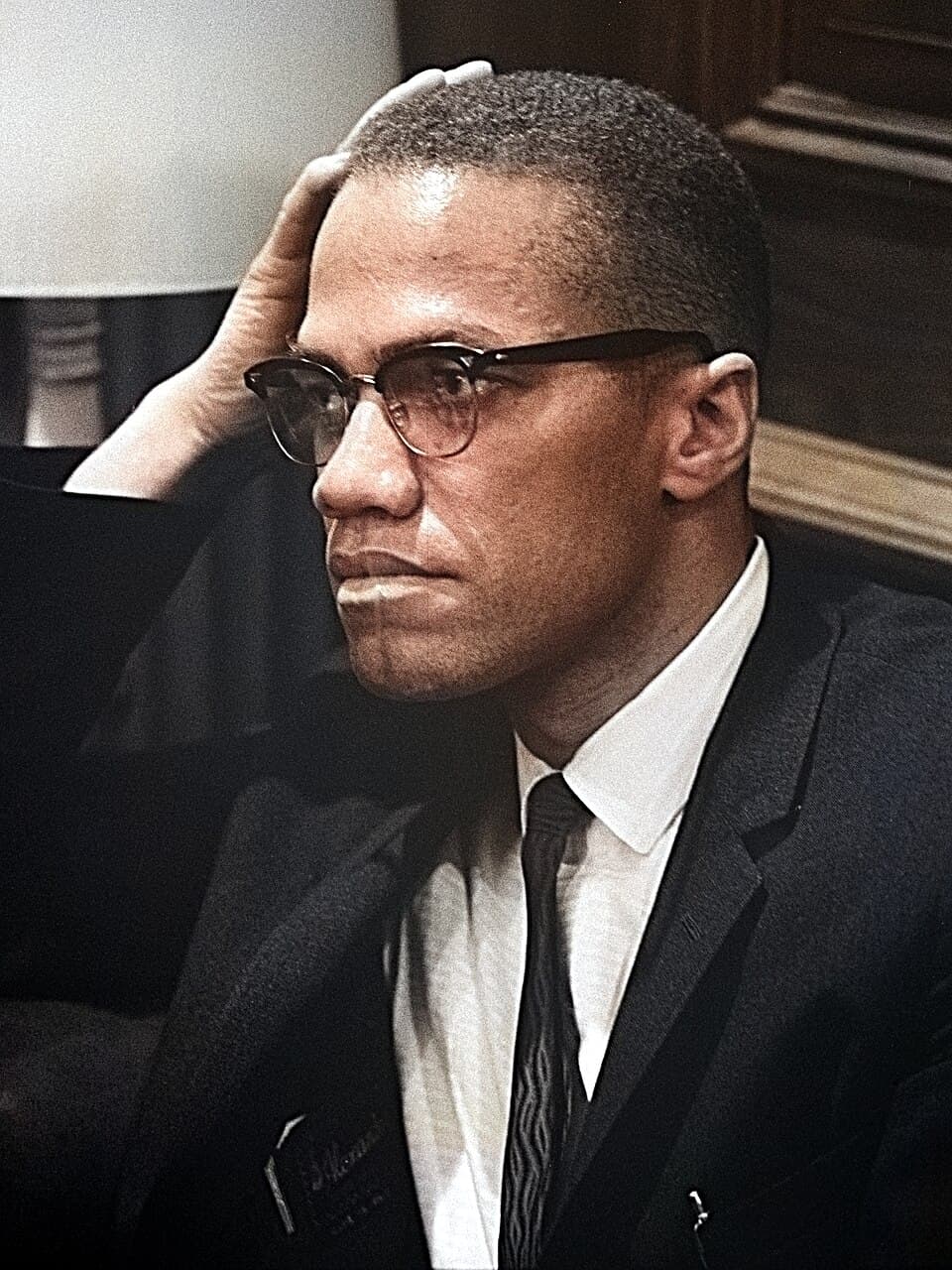
Malcolm X (1925–1965) was an American Muslim minister, civil rights leader, and influential advocate for Black empowerment and human rights. Born Malcolm Little, he became a prominent spokesperson for the Nation of Islam before leaving the organization in 1964 and embracing Sunni Islam. Known for his powerful speeches and criticism of racism, Malcolm X advocated Black self-determination, dignity, and the right to defend oneself against violence. His ideas and legacy continue to influence discussions about racial justice and equality.
 Wikimedia Commons
Malcolm X: Full Biography
Biography
Early Life and Birth
Malcolm X was born Malcolm Little on May 19, 1925, in Omaha, Nebraska, United States. He became one of the most influential African American leaders of the twentieth century, known for his advocacy of Black empowerment, racial pride, and human rights.
His childhood took place during a period of widespread racial discrimination, segregation, and racial violence in the United States. These experiences profoundly shaped his understanding of racism and influenced his later activism.
Family Background
Malcolm was the son of Earl Little and Louise Helen Little. His father was a Baptist preacher and supporter of Marcus Garvey's Black nationalist movement, which promoted Black pride, self-reliance, and unity among people of African descent.
Because of Earl Little's activism, the family experienced threats and intimidation from white supremacist groups. The family eventually moved to Lansing, Michigan, hoping to find greater security.
Childhood and Family Tragedy
Malcolm's childhood was marked by financial hardship and family instability. In 1931, his father died after being struck by a streetcar. Although the family suspected racial violence, the circumstances surrounding his death have remained disputed.
Following his father's death, the family faced serious financial difficulties. Louise Little eventually experienced a mental health crisis and was institutionalized, while her children were separated among different households and care arrangements.
These events had a lasting impact on Malcolm's life and contributed to the difficult circumstances he faced as a young person.
Education and Early Ambitions
Malcolm was an intelligent student and initially performed well at school. However, he became discouraged after a teacher dismissed his ambition to become a lawyer as unrealistic for a Black student.
He eventually left school before completing his formal education. He later moved between Michigan, Boston, and New York, becoming increasingly involved in urban life and informal work.
Although he did not follow a conventional educational path, he later became known for his extensive self-education and powerful public speaking.
Life in Boston and Harlem
As a teenager and young adult, Malcolm spent time in Boston and Harlem, New York City. He worked various jobs and became involved in the nightlife and street culture of the period.
During these years, he became associated with criminal activities, including theft. He later discussed this period openly in his autobiography, describing it as a stage of his life before his religious and intellectual transformation.
His experiences in northern cities also exposed him to different forms of racial inequality, including discrimination in housing, employment, and social opportunities.
Imprisonment and Transformation
In 1946, Malcolm was arrested for burglary and subsequently sentenced to prison. His imprisonment became a turning point in his life.
While incarcerated, he began an intensive program of self-education. He read widely, improved his vocabulary, studied history, and explored philosophical and religious ideas.
He also encountered the teachings of Elijah Muhammad, the leader of the Nation of Islam. This encounter would reshape his beliefs and set the course for his future as a religious leader and political activist.
Discovering the Nation of Islam
The Nation of Islam offered Malcolm a framework for understanding racial inequality, Black identity, discipline, and self-determination. He began corresponding with Elijah Muhammad and became increasingly committed to the organization's teachings.
He rejected his inherited surname, Little, which he viewed as a name imposed through the history of slavery. He adopted the letter X to represent an African family name lost through enslavement.
The name Malcolm X became associated with his rejection of racial oppression and his developing commitment to Black empowerment.
Release from Prison
Malcolm was released from prison in 1952. He soon joined the Nation of Islam's work full-time and became one of its most effective organizers and speakers.
He moved to Detroit and worked closely with Elijah Muhammad and other members of the organization. His discipline, public speaking ability, and commitment helped him rise rapidly through its leadership structure.
His transformation from an incarcerated young man into a nationally recognized religious and political figure became a central part of his public story.
Rise as a Nation of Islam Leader
During the 1950s, Malcolm X became a minister and prominent spokesperson for the Nation of Islam. He helped establish and expand temples, recruit members, and communicate the organization's message to a wider audience.
His speeches emphasized Black pride, economic independence, discipline, and resistance to racial oppression. He criticized white supremacy and challenged the idea that African Americans should patiently wait for equality within existing institutions.
His growing public profile attracted supporters as well as critics, particularly because his ideas differed from the integrationist and nonviolent strategies associated with other civil rights leaders.
Malcolm X and Black Nationalism
Malcolm X became a leading advocate of Black nationalism, which emphasized Black political, economic, and cultural independence.
He argued that African Americans should organize their own communities, develop economic power, and take control of institutions affecting their lives. He also defended the right of Black people to protect themselves against racist violence.
His views differed from those of leaders who prioritized nonviolent civil disobedience and interracial cooperation. These differences became an important part of public debate during the civil rights era.
Powerful Oratory and Public Influence
Malcolm X became famous for his direct language, sharp reasoning, and forceful speeches. He addressed audiences in churches, community centers, universities, and public meetings.
He used personal experiences, historical examples, and pointed questions to challenge racial stereotypes and expose discrimination. His speaking style attracted people who felt that existing approaches to civil rights did not adequately address their anger or demands for immediate change.
Radio, television, newspapers, and public appearances helped spread his message beyond the Nation of Islam's membership.
Relationship with Martin Luther King Jr.
Malcolm X and Martin Luther King Jr. were two of the most recognizable figures in the struggle against racial discrimination, but they initially advocated different approaches.
King emphasized nonviolent resistance, civil disobedience, and the possibility of building an integrated society. Malcolm X emphasized Black self-determination, self-defense, and the need to confront racism directly.
Their differences reflected wider debates within the civil rights movement about strategy, political power, and the meaning of freedom. Both men challenged racial inequality, although their methods and public philosophies were not identical.
They met briefly in Washington, D.C., in 1964. Malcolm's ideas continued to evolve during the final year of his life, and historians have debated how his changing views might have influenced future cooperation with other civil rights leaders.
The Ballot or the Bullet
In 1964, Malcolm X delivered his influential speech commonly known as “The Ballot or the Bullet.”
He argued that African Americans should use political participation strategically while recognizing the need to defend their communities against violence. He criticized political leaders who sought Black votes without delivering meaningful improvements in civil rights.
The speech connected racial justice with voting rights, economic inequality, and political accountability. It remains one of his most widely studied addresses.
Break with the Nation of Islam
By the early 1960s, Malcolm X had become increasingly dissatisfied with aspects of the Nation of Islam's leadership and policies.
Tensions grew between him and Elijah Muhammad over the organization's approach to the civil rights movement and Malcolm's growing independence. The conflict intensified after Malcolm made controversial remarks following President John F. Kennedy's assassination in 1963.
In 1964, Malcolm formally left the Nation of Islam. His departure marked a major turning point in both his religious beliefs and his political work.
Pilgrimage to Mecca
In 1964, Malcolm traveled to Saudi Arabia to undertake the Hajj, the Muslim pilgrimage to Mecca.
During the journey, he encountered Muslims from many racial and national backgrounds worshipping together. The experience challenged aspects of his previous racial worldview and influenced his understanding of the relationship between religion and racial equality.
He began to emphasize that racism, rather than an entire racial group, was the fundamental problem. His evolving perspective did not end his criticism of white supremacy, but it broadened his approach to international cooperation and human rights.
New Name and Religious Beliefs
Following his pilgrimage, Malcolm increasingly used the name El-Hajj Malik El-Shabazz. He embraced Sunni Islam and continued studying Islamic teachings.
His religious transformation was accompanied by changes in his political outlook. He became more open to working with people from different racial backgrounds against injustice.
However, he continued to insist that African Americans should organize independently, exercise political power, and defend their rights.
Organization of Afro-American Unity
In 1964, Malcolm founded the Organization of Afro-American Unity (OAAU). Inspired in part by African independence movements and Pan-Africanism, the organization sought to unite African Americans in the struggle for civil rights and human rights.
Malcolm wanted racial discrimination in the United States to be understood as an international human rights issue rather than solely a domestic political matter.
The OAAU aimed to encourage community organization, political education, economic self-determination, and cooperation with movements in Africa and elsewhere.
His plans were still developing when his life was cut short in 1965.
International Travel and Pan-Africanism
During the final year of his life, Malcolm traveled through parts of Africa and the Middle East. He met political leaders, activists, and intellectuals and explored connections between the African American freedom struggle and independence movements abroad.
These journeys expanded his understanding of colonialism, racial discrimination, and international politics. He increasingly sought to bring the issue of racism in the United States before international audiences.
His developing Pan-African outlook emphasized shared historical experiences and the potential for cooperation among people of African descent around the world.
Marriage to Betty Shabazz
Malcolm X married Betty Sanders, later known as Betty Shabazz, in 1958. She became an important partner in his personal life and remained committed to preserving his legacy after his death.
The couple had six daughters: Attallah, Qubilah, Ilyasah, Gamilah, and twins Malaak and Malikah.
Betty Shabazz later became an educator and public advocate in her own right. Following Malcolm's assassination, she worked to support their children and maintain public awareness of his ideas and contributions.
Assassination in 1965
On February 21, 1965, Malcolm X was preparing to address an audience at the Audubon Ballroom in Manhattan, New York City, when gunmen attacked him.
He was shot and killed at the age of 39. His wife and daughters were present, and the assassination shocked the civil rights movement and the wider public.
The killing occurred amid escalating tensions following his break with the Nation of Islam. Although three men were convicted in 1966, the case later underwent major scrutiny.
Legal Reassessment of the Assassination
For decades, questions remained about the investigation and the convictions in Malcolm X's murder case.
In 2021, Muhammad Aziz and the late Khalil Islam, who had both maintained their innocence, were exonerated after a review found serious problems with the investigation and the evidence used at trial. Mujahid Abdul Halim had confessed to participating in the assassination but testified that Aziz and Islam were not involved.
The case remains an important example of the consequences of flawed criminal investigations and the need for accountability in the justice system.
The Autobiography of Malcolm X
Malcolm worked with journalist Alex Haley on The Autobiography of Malcolm X. The book was published in 1965, several months after his death.
It recounts his childhood, experiences with racism, criminal activities, imprisonment, conversion to the Nation of Islam, political activism, and later religious transformation.
The book became an influential work of American autobiography and political literature. It introduced many readers to Malcolm's personal reflections and helped shape his historical reputation for generations.
Death and Funeral
Malcolm X's funeral took place in Harlem, New York, in February 1965. Thousands of people came to pay their respects, including activists, public figures, and members of the community.
Actor and activist Ossie Davis delivered a widely remembered eulogy that honored Malcolm's courage and significance while recognizing the controversies surrounding his life.
Malcolm was buried at Ferncliff Cemetery in Hartsdale, New York. His death left a major gap in the movements for Black liberation and human rights.
Legacy in the Civil Rights Movement
Malcolm X's influence extended beyond the Nation of Islam and the organizations he founded. His emphasis on Black pride, self-determination, and resistance to oppression influenced later Black Power movements and generations of activists.
His life also encouraged discussions about the relationship between racial justice, religion, international politics, and economic independence.
His views changed over time, and his legacy cannot be reduced to a single political position or stage of his life.
Cultural Influence
Malcolm X has been the subject of books, films, documentaries, academic studies, and public commemorations. Spike Lee's 1992 film Malcolm X, starring Denzel Washington, introduced his life to a new generation of viewers.
His speeches continue to be studied in schools and universities for their historical significance, rhetorical force, and arguments about political power and racial equality.
His image and words remain influential in debates about identity, justice, self-defense, and social change.
Conclusion
Malcolm X rose from a childhood marked by hardship to become one of the most influential voices in the struggle for Black empowerment and human rights. His experiences with racism, imprisonment, religious transformation, and political activism shaped a philosophy that evolved throughout his life.
His break with the Nation of Islam and pilgrimage to Mecca broadened his understanding of race and humanity, while his later work sought to connect African American struggles with international movements for justice.
Although his life ended violently in 1965, Malcolm X's ideas continue to inspire debate, scholarship, and activism around the world.
Did you know?
- Malcolm X was born **Malcolm Little** and adopted “X” to symbolize the African family name lost through slavery. - He educated himself extensively while in prison, studying books and improving his vocabulary. - His pilgrimage to Mecca in 1964 influenced his views on race and religious brotherhood. - He founded the **Organization of Afro-American Unity** in 1964 to promote human rights and Black self-determination. - *The Autobiography of Malcolm X*, written with Alex Haley, was published after his assassination. - In 2021, two men convicted of his murder decades earlier were exonerated after a review uncovered serious problems in the case. <Cite refs={["turn911815search7","turn911815search3","turn911815search4"]}/>