Comedian · France
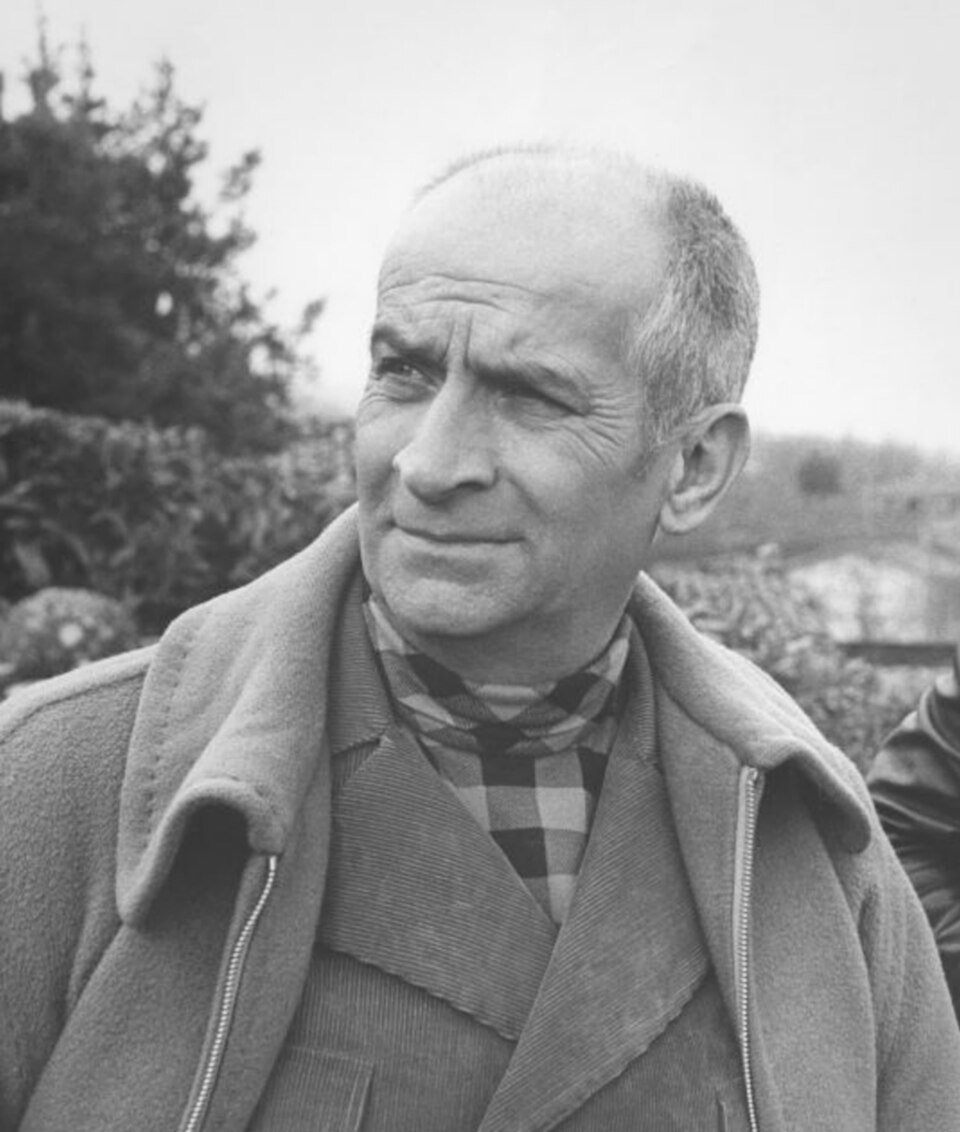
Louis de Funès
Louis de Funès was a French actor and comedian widely regarded as one of the most popular comic performers in French cinema. Born Louis Germain David de Funès de Galarza on July 31, 1914, in Courbevoie, France, he became famous for his expressive facial movements, energetic physical comedy, rapid delivery, and memorable portrayals of short-tempered, ambitious characters. After years of working in small roles, he achieved major success in the 1960s with films such as *Le Gendarme de Saint-Tropez*, *Fantômas*, and *La Grande Vadrouille*. His performances in the *Gendarme* film series made him a beloved figure across generations. De Funès received the French César Award for Best Actor for *L'Aile ou la Cuisse* in 1977. He died on January 27, 1983, in Nantes, France, leaving a lasting legacy in French comedy.
 Wikimedia Commons
Louis de Funès: Full Biography
Biography
1. Introduction
Louis de Funès was a legendary French actor and comedian whose performances helped define French comedy during the 1960s and 1970s. Famous for his expressive face, quick movements, distinctive voice, and explosive comic timing, he became one of the most recognizable performers in French cinema.
Born Louis Germain David de Funès de Galarza, he appeared in more than 140 films during his career. He became particularly famous for portraying impatient, proud, authoritarian, and easily frustrated characters whose exaggerated reactions created memorable comic situations.
His best-known films include The Gendarme of Saint-Tropez, Fantômas, The Sucker, The Great Stroll, The Mad Adventures of Rabbi Jacob, and The Wing or the Thigh. His partnership with directors such as Jean Girault and Gérard Oury played a significant role in his success.
2. Early Life and Family Background
Louis de Funès was born on July 31, 1914, in Courbevoie, France. His parents, Carlos Luis de Funès de Galarza and Leonor Soto Reguera, came from Spanish backgrounds.
His father had trained as a lawyer before becoming involved in the diamond trade. His mother played an important role in his early development and encouraged his interest in music.
As a child, de Funès enjoyed drawing, playing the piano, and entertaining people with humorous expressions. These interests helped develop the expressive physical style that later became one of his trademarks.
Growing up in a family with Spanish roots in France gave him a multicultural background, although his professional identity became closely associated with French popular cinema.
3. Education and Early Interests
De Funès studied at various schools and briefly pursued technical education related to photography and cinema. However, he did not immediately establish a career in filmmaking.
He developed a particular talent for playing the piano and eventually worked as a pianist in Parisian cafés and bars. During these performances, he learned to entertain audiences through facial expressions, gestures, and comic timing.
Although he had not yet achieved fame as an actor, these years helped him understand how to capture an audience's attention. His experience as a pianist also strengthened his sense of rhythm, which later became an important element of his comedy.
4. Early Career in Theatre and Cinema
De Funès began appearing in films during the 1940s, initially taking small roles that offered limited recognition. He worked steadily while developing his acting abilities and building relationships within the French entertainment industry.
In 1945, he appeared in La Tentation de Barbizon, one of his early film roles. During the following years, he continued to accept supporting parts in films while performing on stage.
His breakthrough did not come immediately. For more than a decade, he was primarily known as a hardworking character actor rather than a leading star.
His persistence eventually paid off as filmmakers began recognizing his unusual comic talent and his ability to transform even relatively small scenes into memorable performances.
5. Breakthrough in French Cinema
During the 1950s, de Funès gradually gained wider recognition. His performance in La Traversée de Paris (1956) helped introduce him to a larger audience.
He became increasingly popular through theatre and supporting film roles, developing a style that combined exaggerated facial expressions, sharp gestures, nervous movements, and rapid dialogue.
By the early 1960s, he was increasingly being cast in leading roles. His ability to portray characters who were simultaneously ridiculous, intimidating, and vulnerable made him particularly effective in comedy.
The success of Pouic-Pouic in 1963 helped establish him as a major star and opened the door to a remarkable series of commercial hits.
6. The Gendarme Film Series
One of the defining achievements of de Funès's career was his portrayal of Ludovic Cruchot in Le Gendarme de Saint-Tropez (1964).
Cruchot is an ambitious and strict police officer whose determination to enforce rules repeatedly leads to absurd situations. De Funès used the character to combine authority, vanity, frustration, and slapstick humor.
The film became a major success and led to several sequels:
- Le Gendarme à New York (1965)
- Le Gendarme se marie (1968)
- Le Gendarme en balade (1970)
- Le Gendarme et les extraterrestres (1979)
- Le Gendarme et les Gendarmettes (1982)
The series helped make de Funès a household name in France and many other countries. His performance established Cruchot as one of the most memorable characters in French comedy.
7. The Fantômas Trilogy
De Funès also became widely known for playing Commissioner Juve in the Fantômas film series.
The three films were Fantômas (1964), Fantômas se déchaîne (1965), and Fantômas contre Scotland Yard (1967).
The films combined crime, adventure, action, and comedy. De Funès's energetic portrayal of Commissioner Juve provided much of the comic contrast to the mysterious criminal Fantômas.
The series appealed to audiences who enjoyed both detective stories and lighthearted entertainment. It also demonstrated de Funès's ability to work within ensemble productions rather than relying exclusively on a single character.
8. Major Film Successes
Le Corniaud (1965)
Directed by Gérard Oury, Le Corniaud, released internationally as The Sucker, paired de Funès with Bourvil. Their contrasting personalities helped create a successful comedy involving a seemingly ordinary journey that develops into a series of unexpected events.
La Grande Vadrouille (1966)
La Grande Vadrouille, known in English as The Great Stroll, starred de Funès alongside Bourvil. Set during the Second World War, the film follows two French civilians who help British airmen escape German-occupied territory.
The film became one of the most successful French films of its era and remained a major cultural reference point for decades.
Oscar (1967)
In Oscar, de Funès played Bertrand Barnier, a businessman whose orderly life is disrupted by a series of misunderstandings and unexpected revelations.
The role showcased his ability to sustain fast-paced comedy through dialogue, physical movement, and escalating frustration.
Les Aventures de Rabbi Jacob (1973)
In The Mad Adventures of Rabbi Jacob, de Funès portrayed Victor Pivert, a prejudiced businessman caught up in a complicated series of events involving political conflict and mistaken identity.
The film combined physical comedy with themes of prejudice and social reconciliation. It became one of the best-known films of his career.
L'Aile ou la Cuisse (1976)
In The Wing or the Thigh, de Funès played Charles Duchemin, a respected food critic who opposes the spread of industrialized food production.
The film paired him with Coluche and allowed him to explore a character who combined professional authority with comic stubbornness.
9. Collaboration with Directors and Co-Stars
De Funès worked with several important figures in French cinema.
Director Jean Girault became closely associated with his career through the Gendarme series and other successful comedies. Their collaboration helped establish a recognizable style that audiences came to expect.
Director Gérard Oury also played a major role in his success, particularly through Le Corniaud, La Grande Vadrouille, and Les Aventures de Rabbi Jacob.
His partnership with Bourvil was especially memorable because their contrasting comic styles complemented one another. De Funès often played an impatient, domineering character, while Bourvil's more understated manner provided a counterbalance.
He also worked with Claude Gensac, who frequently played his on-screen wife in several films.
10. Acting Style and Comic Technique
De Funès's acting style was highly distinctive. He could convey anger, confusion, arrogance, fear, or excitement through small changes in facial expression and sudden physical movements.
His comedy frequently relied on the contrast between a character's sense of importance and the increasingly absurd circumstances surrounding him.
Several elements defined his performances:
- Facial expressions: Rapidly changing expressions made his reactions instantly recognizable.
- Physical comedy: Gestures, posture, and sudden movements added energy to scenes.
- Vocal delivery: Fast speech, changes in tone, and emphatic exclamations strengthened the humor.
- Comic timing: He used pauses, interruptions, and escalating frustration to create laughter.
- Character contrast: His strict or arrogant characters often lost control of the situations they tried to dominate.
Although his performances could appear spontaneous, they required careful timing and physical precision.
11. Theatre Career
Theatre remained an important part of de Funès's professional development. Before becoming a major film star, he spent years performing on stage and working with theatre companies.
He was particularly successful in comedy, where his ability to react quickly and communicate through gestures made him effective in front of live audiences.
The stage also provided opportunities to refine roles before adapting them for film. His success in the theatre production Oscar helped establish the role that he later performed on screen.
His theatrical experience contributed to the rhythm and intensity that audiences recognized in his movies.
12. Personal Life and Marriage
De Funès married Germaine Louise Élodie Carroyer in 1936. They had one son, Daniel, and later divorced.
In 1943, he married Jeanne Barthélemy de Maupassant. They remained married until his death and had two sons, Patrick and Olivier.
Olivier briefly pursued acting and appeared alongside his father in several films before becoming a commercial airline pilot. Patrick pursued a medical career.
Despite his energetic screen persona, de Funès was often described as more reserved in private. He valued family life and spent considerable time away from the public eye when not working.
13. Gardening and Love of Roses
Beyond acting, de Funès had a strong interest in gardening, particularly growing roses.
During his later years, he spent time at the Château de Clermont in Le Cellier, western France, where he cultivated a garden and enjoyed a quieter lifestyle.
His love of roses became part of his personal legacy. A rose variety was named after him, reflecting the interest he maintained outside the entertainment industry.
This quieter side of his life contrasted with the frantic and explosive characters he often portrayed on screen.
14. Health Challenges and Final Years
De Funès experienced serious heart problems during the later years of his life. After suffering heart attacks in the 1970s, he reduced some of his professional activities and took greater care with his health.
Despite these difficulties, he continued working on selected projects. His later films included L'Avare (1980), in which he played the miser Harpagon, and La Soupe aux choux (1981).
His final film was Le Gendarme et les Gendarmettes, released in 1982. He died on January 27, 1983, in Nantes, France, following a heart attack.
His death marked the end of a major era in French popular comedy, but his films continued to be shown to new generations.
15. Awards and Recognition
De Funès received public recognition for his contribution to French entertainment. Among his honors was the honorary César Award, presented in 1980 for his career.
His influence was also reflected in his films' commercial success and their continuing popularity on television and in home media.
Although awards formed only one part of his career, his lasting popularity among French audiences became a major measure of his cultural impact.
16. Cultural Influence and Legacy
Louis de Funès remains one of the defining figures of French screen comedy. His films have been watched by generations of audiences, and his characters remain familiar throughout France and in numerous other countries.
His influence can be seen in the enduring popularity of the Gendarme series, the continued appreciation of La Grande Vadrouille, and the frequent references to his distinctive expressions and comic mannerisms.
His performances also demonstrate how physical comedy and expressive acting can communicate across language barriers. Even viewers unfamiliar with French dialogue can often appreciate the humor conveyed through his movements and facial expressions.
17. Conclusion
Louis de Funès built an extraordinary career through persistence, physical precision, and a distinctive comic personality. After years of supporting roles and stage performances, he became one of the most successful actors in French comedy.
From the Gendarme series to Fantômas, La Grande Vadrouille, and L'Aile ou la Cuisse, his films combined energetic performances with memorable characters and situations.
He died in 1983, but his work continues to entertain audiences. His legacy rests on his ability to turn frustration, authority, and everyday misunderstandings into timeless comedy.
Did you know?
**Did You Know?** - Louis de Funès was born on July 31, 1914, in Courbevoie, France. - His full name was Louis Germain David de Funès de Galarza. - Before becoming famous, he worked as a pianist in Parisian cafés and bars. - He appeared in more than 140 films during his acting career. - His character Ludovic Cruchot became famous through the *Gendarme* film series. - He frequently collaborated with director Jean Girault and actor Bourvil. - *La Grande Vadrouille* became one of the most successful French films of its era. - He received an honorary César Award in 1980 for his contribution to cinema. - He enjoyed gardening and growing roses in his private life. - He died on January 27, 1983, in Nantes, France.