Activist · Captaincy General of the Philippines
José Rizal
José Rizal (1861–1896) was a Filipino national hero, writer, physician, poet, and reformist who inspired the movement for Philippine independence from Spanish colonial rule. He is best known for his novels *Noli Me Tangere* and *El Filibusterismo*, which exposed the abuses of Spanish colonial authorities and the clergy. Although he advocated peaceful reform rather than violent revolution, his writings helped awaken Filipino national consciousness. He was executed by Spanish authorities in 1896 and remains one of the most influential figures in Philippine history.
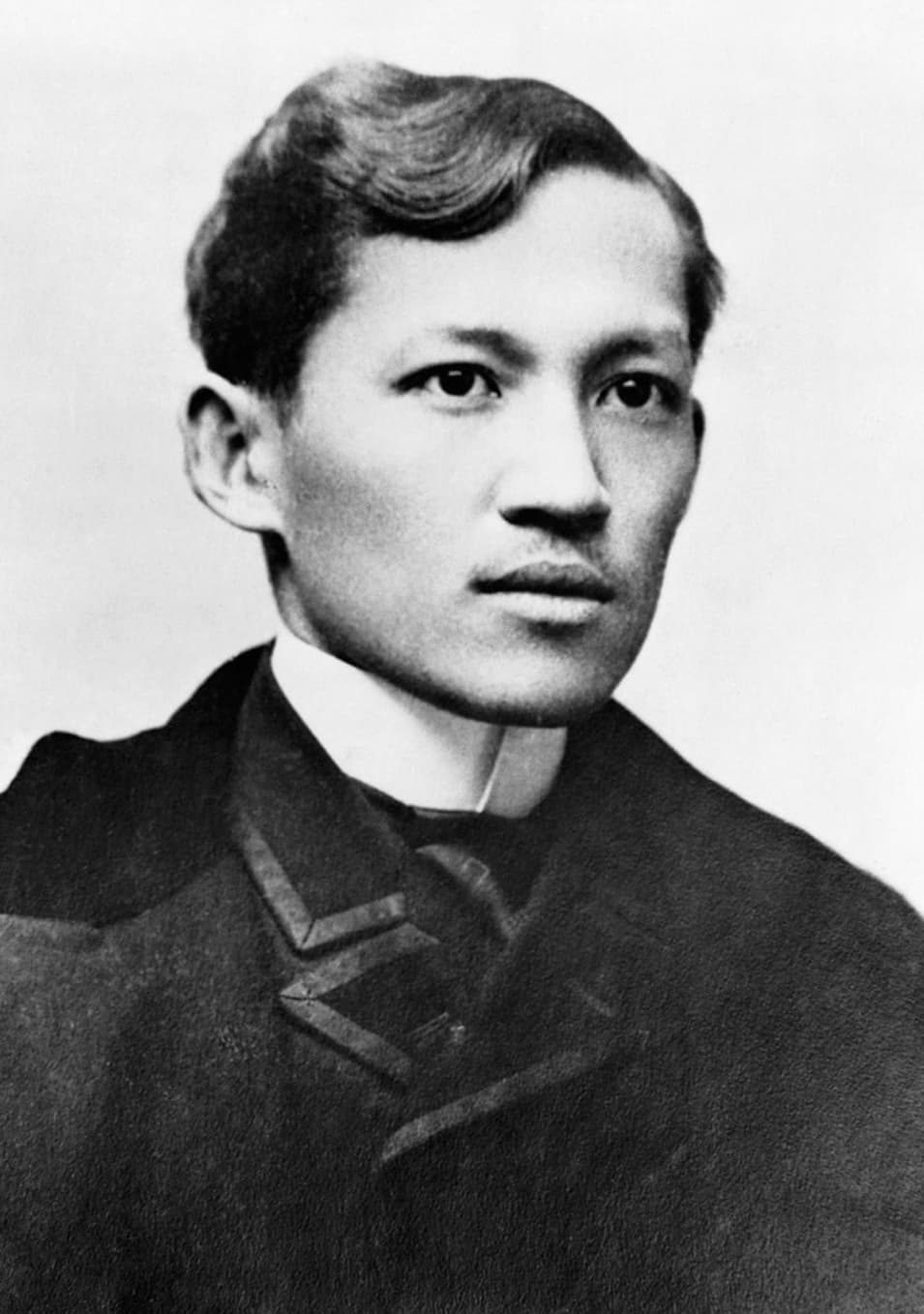 Wikimedia Commons
José Rizal: Full Biography
Biography
Early Life and Family Background
José Protacio Rizal Mercado y Alonso Realonda, widely known as José Rizal, was born on June 19, 1861, in Calamba, Laguna, in the Philippines, then a colony of Spain. He grew up in a relatively prosperous and educated Filipino family.
His father, Francisco Mercado, was a landowner and farmer, while his mother, Teodora Alonso Realonda, was an educated woman who strongly encouraged her children's learning. Rizal was the seventh of eleven children.
His family valued education, literature, and intellectual development. Their household exposed him to books, religious teachings, and discussions about society, helping shape his curiosity and interest in the problems facing the Philippines under Spanish colonial rule.
Childhood and Early Education
Rizal demonstrated remarkable intellectual ability from a young age. His mother taught him the alphabet and encouraged his early interest in reading, poetry, and storytelling.
He studied at schools in Biñan and later entered the Ateneo Municipal de Manila, where he excelled academically. He earned his Bachelor of Arts degree in 1877 and continued his studies at the institution.
His education introduced him to literature, philosophy, science, and the humanities. He also developed skills in drawing, sculpture, languages, and poetry.
These diverse interests contributed to his development as a writer and reformist thinker.
Higher Education in Manila
Rizal enrolled at the University of Santo Tomas in Manila, initially studying philosophy and letters before pursuing medicine. He became interested in ophthalmology partly because his mother was experiencing worsening eyesight.
His time at the university exposed him to the racial and social inequalities of colonial education. Filipino students often faced discrimination compared with Spanish students, and these experiences strengthened Rizal's awareness of the need for reform.
Seeking better educational opportunities and greater intellectual freedom, he eventually decided to continue his studies abroad.
Studies in Spain
In 1882, Rizal traveled to Spain to pursue further education. He studied medicine and philosophy and letters at the Central University of Madrid, earning his medical degree in 1884 and completing his studies in philosophy and letters in 1885.
Spain also exposed him to liberal political ideas, European literature, and discussions about civil rights and national identity. He became involved with Filipino expatriates who sought reforms in their homeland.
Rizal believed that Filipinos should enjoy equality before the law, freedom of expression, representation in government, and access to modern education.
Further Studies in Europe
After completing his studies in Madrid, Rizal continued his medical training in Paris and Heidelberg. He specialized in ophthalmology and worked with respected physicians.
His European travels expanded his knowledge of science, culture, and politics. He also learned additional languages and interacted with intellectuals from different countries.
These experiences helped him understand the Philippines in a wider international context. He increasingly viewed education, political reform, and national consciousness as essential to overcoming colonial abuses.
Literary Career and Early Writings
Rizal began writing poetry and essays during his youth. His early works often reflected themes of patriotism, education, human dignity, and the value of intellectual freedom.
He used literature to criticize social injustice and encourage Filipinos to recognize their capacity for self-improvement and collective action.
His writings challenged the belief that Filipinos were intellectually or culturally inferior to Europeans. Instead, he argued that colonial institutions and discrimination prevented Filipino society from reaching its potential.
Noli Me Tangere
In 1887, Rizal published his first major novel, Noli Me Tangere, in Berlin, Germany. The Latin title means “Touch Me Not.”
The novel portrayed corruption, religious hypocrisy, racial discrimination, and abuses of power in colonial Philippine society. Through its characters and plot, Rizal illustrated how colonial institutions affected ordinary Filipinos.
The central character, Crisóstomo Ibarra, returns to the Philippines after studying abroad and attempts to improve society through education and peaceful reform.
The book provoked strong opposition from influential religious and colonial authorities. Nevertheless, it circulated among readers and became an important work in the development of Filipino national consciousness.
El Filibusterismo
Rizal published his second major novel, El Filibusterismo, in Ghent, Belgium, in 1891. Often translated as The Reign of Greed, it continued the social criticism begun in Noli Me Tangere.
The novel presents a darker vision of colonial society and examines the consequences of oppression, injustice, and frustrated reform. Its main character, Simoun, seeks revenge against the system that has harmed him and his community.
Through the novel, Rizal explored the moral and political consequences of corruption and violence. The book further established his reputation as a powerful critic of Spanish colonial rule.
The Propaganda Movement
Rizal became a leading figure in the Propaganda Movement, a reform campaign organized by Filipino intellectuals and expatriates in Europe during the late nineteenth century.
The movement sought political and social reforms rather than immediate armed independence. Its goals included equal treatment of Filipinos and Spaniards, freedom of expression, secularization of parishes, and representation of the Philippines in the Spanish Cortes.
Rizal worked alongside other reformists, including Marcelo H. del Pilar and Graciano López Jaena. Their essays and publications sought to persuade Spanish authorities that the colonial system required fundamental changes.
Although the movement helped spread nationalist ideas, its demands were not fully achieved.
Essays and Political Thought
Rizal wrote influential essays examining Philippine history, education, and colonial society. In The Philippines a Century Hence, he considered the possible future of the country and warned that continued repression could lead to major political upheaval.
In The Indolence of the Filipino, he challenged colonial claims that Filipinos were naturally lazy. He argued that historical circumstances, forced labor, economic restrictions, and poor governance had contributed to the conditions described by colonial commentators.
His political thought emphasized education, civic responsibility, legal equality, and peaceful reform. He believed that a population equipped with knowledge and a strong sense of identity could pursue a more just society.
Return to the Philippines
Rizal returned to the Philippines in 1887 after publishing Noli Me Tangere. His novel had attracted attention from both supporters and opponents of reform.
Because of pressure from colonial authorities and concerns about his safety, he later left the country again. His travels and public activities continued to place him at the center of debates about the future of the Philippines.
Despite the risks, Rizal remained committed to exposing social injustice and encouraging reform.
La Liga Filipina
In 1892, Rizal returned to Manila and founded La Liga Filipina, a civic organization intended to unite Filipinos and promote peaceful social and political reform.
The organization advocated mutual assistance, education, economic cooperation, and protection against injustice. Rizal hoped that organized civic action could help Filipinos improve their society without resorting to violence.
Spanish authorities viewed his activities with suspicion. Shortly after the league was founded, Rizal was arrested and exiled to Dapitan, a remote town in Mindanao.
Exile in Dapitan
Rizal spent approximately four years in exile in Dapitan, from 1892 to 1896. Despite his restricted circumstances, he remained productive and continued to serve the local community.
He practiced medicine, treated patients, taught students, and participated in agricultural and engineering projects. He helped improve local infrastructure, including a water supply system, and pursued scientific and natural-history interests.
His years in Dapitan demonstrated his belief that social improvement could begin through practical work, education, and public service.
Medical Work and Scientific Interests
Rizal was a trained physician with particular expertise in ophthalmology. During his exile, he treated patients from the local community and continued to develop his medical skills.
He also studied plants, animals, geography, and other scientific subjects. His observations and collections contributed to his reputation as a scholar as well as a literary figure.
His scientific interests reflected a broader commitment to evidence, learning, and the improvement of everyday life.
Relationship with Josephine Bracken
During his exile in Dapitan, Rizal met Josephine Bracken, an Irish woman who had accompanied her adoptive father to seek medical treatment.
The two developed a close relationship and planned to marry. Their personal circumstances were complicated by colonial restrictions and disagreements over religious and civil procedures.
Bracken remained an important figure in Rizal's final years. Their relationship is often discussed in biographies as part of the personal side of a man whose public life was dominated by political conflict and intellectual work.
The Philippine Revolution
In 1896, the Katipunan, a revolutionary organization founded by Andrés Bonifacio, launched an armed uprising against Spanish colonial rule.
Rizal had not advocated the Katipunan's armed revolution. He believed that political change should be pursued through education and reform, and he disagreed with a revolt that he considered premature.
Nevertheless, Spanish authorities associated his nationalist writings and civic activities with the growing independence movement. His influence among Filipinos made him a target of colonial suspicion.
Arrest and Trial
In 1896, Rizal offered to serve as a physician in Cuba, where Spanish authorities were fighting another conflict. While traveling, he was arrested and returned to the Philippines.
He was accused of rebellion, sedition, and conspiracy, despite his opposition to the Katipunan's armed uprising. A military tribunal tried him under Spanish colonial authority.
The proceedings were widely criticized as politically motivated. Rizal's writings and his role in promoting Filipino national consciousness were central to the case against him.
He was sentenced to death, becoming a symbol of the colonial government's determination to suppress nationalist opposition.
Execution on December 30, 1896
José Rizal was executed by firing squad on December 30, 1896, at Bagumbayan, now part of Rizal Park in Manila. He was 35 years old.
His death shocked many Filipinos and intensified opposition to Spanish rule. Although he had advocated peaceful reform, his execution strengthened the movement for independence and made him a martyr in the eyes of many compatriots.
Rizal's final writings, including his farewell poem commonly known as Mi Último Adiós (My Last Farewell), expressed love for his homeland and a willingness to sacrifice for its future.
Mi Último Adiós
Rizal wrote Mi Último Adiós shortly before his execution. The poem is a deeply personal expression of patriotism, sacrifice, and hope for the Philippines.
It reflects his willingness to accept death while maintaining faith in his country's future. The poem became one of the most celebrated works in Filipino literature and remains closely associated with his national legacy.
Its enduring significance lies in the way it connects individual sacrifice with the aspirations of a people seeking dignity and freedom.
Recognition as a Philippine National Hero
After his death, Rizal became one of the central figures in the Philippines' national memory. His writings helped shape the development of Filipino identity and inspired later generations of reformers and independence advocates.
The Philippine government officially commemorates his execution each year on December 30 through Rizal Day. Schools, public institutions, and cultural organizations continue to study his works and contributions.
Although he did not lead an armed revolution, his intellectual and literary influence made him a powerful symbol of resistance to colonial oppression.
Personal Qualities and Interests
Rizal was known for his intellectual curiosity, discipline, and wide range of talents. In addition to writing and medicine, he practiced drawing, painting, sculpture, and other artistic activities.
He spoke several languages and maintained an interest in scientific research and cultural exchange. His international education helped him communicate across different intellectual traditions.
His life combined scholarly achievement with a deep concern for the social conditions of his homeland.
Legacy and Historical Significance
José Rizal remains a foundational figure in Philippine history because he used literature and public thought to expose the injustices of colonial rule.
His novels, essays, and poems helped Filipinos imagine themselves as a community with shared rights, responsibilities, and aspirations. His execution further strengthened the nationalist movement, even though he had not supported immediate armed revolt.
Historians continue to discuss the relationship between Rizal's reformist approach and the revolutionary methods of figures such as Andrés Bonifacio. Together, their different strategies contributed to the broader struggle for Philippine independence.
Conclusion
José Rizal was a physician, writer, poet, and reformist whose intellectual courage helped transform Philippine political consciousness. Through Noli Me Tangere, El Filibusterismo, and his other writings, he exposed the injustices of Spanish colonial rule and called for education, equality, and reform.
His execution in 1896 turned him into a national martyr, and his ideas continue to influence Filipino literature, education, and civic life. Rizal's legacy endures as a reminder of the power of knowledge, peaceful resistance, and dedication to one's country.
Did you know?
- José Rizal was a skilled physician who specialized in ophthalmology, partly motivated by his mother's eyesight problems. - He studied in Spain, France, and Germany and spoke several languages. - His novel *Noli Me Tangere* was published in Berlin in 1887. - *El Filibusterismo*, his second major novel, was published in Belgium in 1891. - Rizal founded La Liga Filipina in 1892 to encourage peaceful civic reform. - During his exile in Dapitan, he practiced medicine, taught students, and helped develop a local water supply system. - His farewell poem, *Mi Último Adiós*, became one of the most celebrated patriotic poems in Philippine literature. - The Philippines commemorates his execution each year on December 30 as Rizal Day.