YouTuber · Canada
Jordan Peterson
Jordan Peterson is a Canadian psychologist, author, educator, and public commentator known for his work on psychology, personality, mythology, religion, and personal development. Born on June 12, 1962, in Edmonton, Alberta, Canada, he earned degrees from the University of Alberta and a Ph.D. in clinical psychology from McGill University. He taught at Harvard University before joining the University of Toronto, where he became a professor of psychology. Peterson gained international recognition through his lectures, online videos, podcasts, and bestselling books, including *Maps of Meaning*, *12 Rules for Life*, *Beyond Order*, and *We Who Wrestle with God*. His discussions of personal responsibility, cultural issues, religion, and political ideas have attracted a large audience as well as public debate.
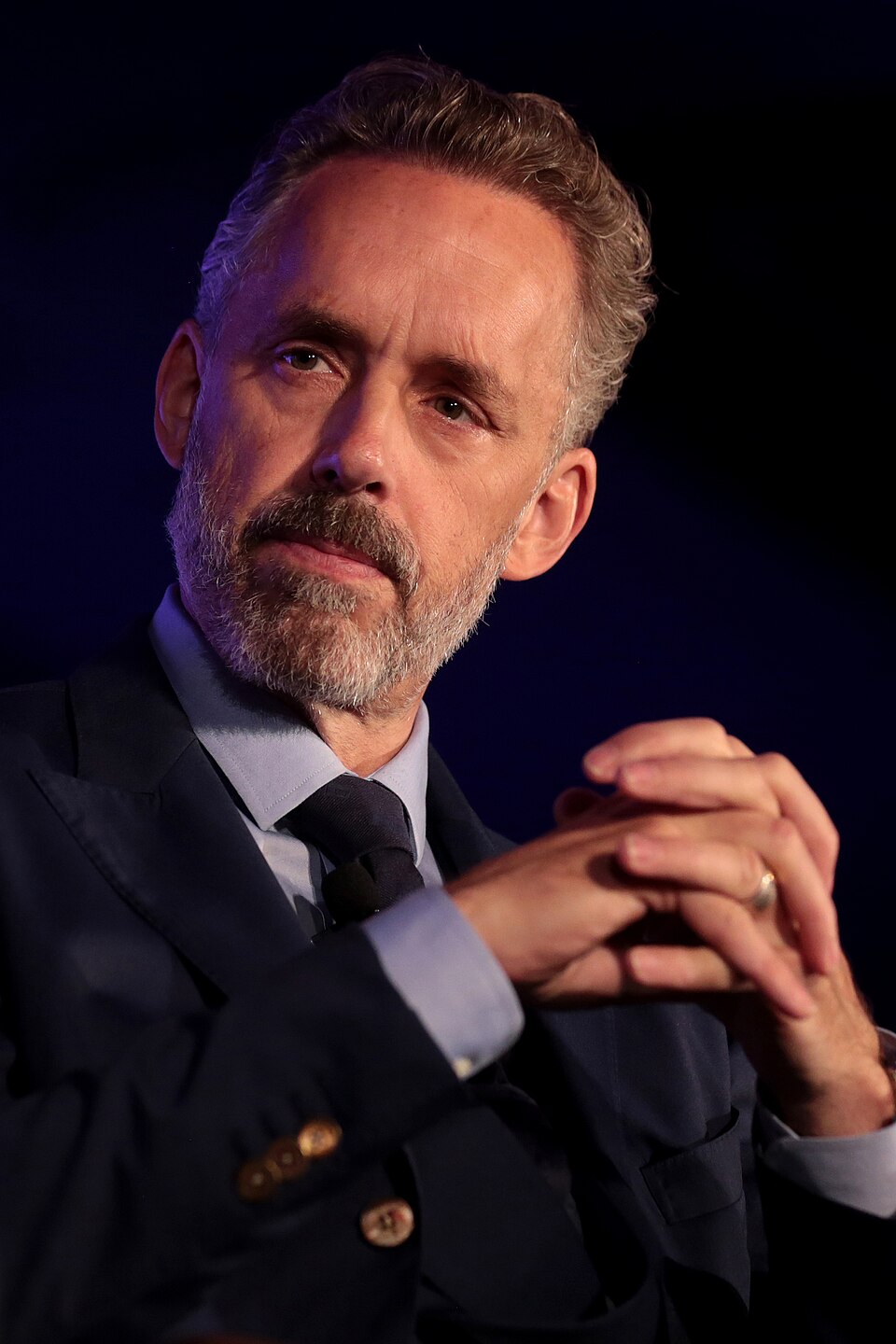 Wikimedia Commons
Jordan Peterson: Full Biography
Biography
1. Introduction
Jordan Bernt Peterson, widely known as Jordan B. Peterson, is a Canadian psychologist, author, university educator, and public commentator. He is known for exploring human personality, belief systems, mythology, religion, individual responsibility, and the search for meaning. Through his academic work, books, public lectures, and online platforms, Peterson has reached audiences around the world.
His book 12 Rules for Life: An Antidote to Chaos became an international bestseller, while his lectures on psychology and religious stories introduced many viewers to ideas from philosophy, literature, and psychological research. Peterson is also a controversial public figure whose opinions on cultural and political subjects have generated extensive discussion.
2. Early Life and Childhood
Jordan Bernt Peterson was born on June 12, 1962, in Edmonton, Alberta, Canada. He grew up in the community of Fairview in northern Alberta. His father, Walter Peterson, worked as a schoolteacher, while his mother, Beverley Peterson, worked as a librarian.
Growing up in a relatively small community helped shape his interest in the experiences, beliefs, and challenges of ordinary people. From an early age, Peterson developed an interest in literature, philosophy, politics, and questions about how individuals and societies understand the world.
As he grew older, these interests led him toward psychology and the study of the ideas and stories that influence human behavior.
3. Education
Peterson attended the University of Alberta, where he studied political science and later psychology. He earned a bachelor's degree in political science in 1982 and a bachelor's degree in psychology in 1984.
He subsequently continued his education at McGill University in Montreal, Quebec. He completed a Ph.D. in clinical psychology in 1991. His doctoral research examined psychological factors associated with a predisposition to alcoholism.
After completing his doctorate, Peterson remained at McGill as a postdoctoral fellow from 1991 to 1993. His academic training established the foundation for his later research into personality, emotion, motivation, belief, and human behavior.
4. Academic Career
Work at Harvard University
In 1993, Peterson moved to the United States to join Harvard University's psychology department. He worked as an assistant professor and later an associate professor.
During his time at Harvard, he taught courses and conducted research related to clinical psychology, personality, and the psychological processes involved in belief and behavior. His teaching and research helped develop the ideas that would later appear in his books and public lectures.
University of Toronto
Peterson returned to Canada in 1998 and joined the University of Toronto's psychology department. He eventually became a full professor and continued teaching, conducting research, and working with clinical psychology clients.
His academic interests included personality, antisocial behavior, alcoholism, motivation, emotion, creativity, and religious and ideological beliefs. He also collaborated with students and colleagues on scientific publications.
Peterson later became Professor Emeritus of Psychology at the University of Toronto. His academic career provided the foundation for his subsequent work as an author and public educator.
5. Research and Psychological Ideas
A central theme in Peterson's work is the relationship between personality, behavior, belief, and meaning. He has explored how people interpret the world, develop personal values, and respond to difficult experiences.
His research and academic writing have addressed topics such as:
- Personality differences and individual behavior
- Emotion, motivation, and decision-making
- Creativity and performance
- Alcoholism and antisocial behavior
- Religious and ideological belief
- The psychological importance of stories and myths
Peterson frequently draws connections between psychological research and ideas from literature, philosophy, mythology, and religious traditions. His approach aims to explain how people use stories and values to understand their experiences and organize their lives.
6. Writing Career and Major Books
Maps of Meaning: The Architecture of Belief
Published in 1999, Maps of Meaning: The Architecture of Belief was Peterson's first major book. It examines the psychological significance of belief systems, mythology, and cultural narratives.
The book brings together ideas from psychology, neuroscience, religion, philosophy, and literature. Peterson explores how people distinguish between order and chaos and how shared stories can influence individual behavior and social organization.
The work became an important foundation for his later university lectures and public discussions.
12 Rules for Life: An Antidote to Chaos
Published in 2018, 12 Rules for Life: An Antidote to Chaos brought Peterson international mainstream recognition.
The book presents twelve principles concerning responsibility, honesty, personal conduct, relationships, and the challenges of everyday life. It encourages readers to take responsibility for their actions, communicate truthfully, establish meaningful goals, and develop habits that support a more organized life.
Its combination of psychological concepts, philosophical reflections, and practical advice helped it reach a broad readership.
Beyond Order: 12 More Rules for Life
Published in 2021, Beyond Order: 12 More Rules for Life continued themes from his earlier bestseller. The book discusses the balance between stability and change, arguing that people need structure while remaining willing to confront uncertainty and reconsider familiar assumptions.
It examines personal development, relationships, responsibility, and the difficulties that can arise when established patterns no longer serve a useful purpose.
We Who Wrestle with God: Perceptions of the Divine
Published in 2024, We Who Wrestle with God: Perceptions of the Divine explores biblical narratives and their psychological, moral, and cultural significance.
Peterson interprets stories from the Bible through themes such as sacrifice, responsibility, suffering, transformation, and the search for meaning. The book reflects his longstanding interest in the relationship between religious narratives and human psychology.
7. Rise to International Recognition
Peterson became widely known outside academic circles in 2016, when he published online lectures and commentary criticizing proposed Canadian legislation concerning gender identity and expression, commonly known as Bill C-16.
His interpretation of the legislation and his arguments about compelled speech generated extensive media attention and public debate. Supporters viewed his position as a defense of freedom of expression, while critics challenged aspects of his legal interpretation and his broader commentary on gender and identity.
The controversy helped bring his lectures and interviews to a much larger audience. His online following expanded further after the publication of 12 Rules for Life in 2018.
Peterson subsequently became a frequent guest on podcasts, interview programs, and public discussion events. His content covers psychology, philosophy, religion, culture, politics, and personal development.
8. YouTube, Podcasts, and Online Education
Peterson has used online media to make lectures and discussions accessible to audiences beyond universities. His video content includes university lectures, interviews, discussions about literature and mythology, and explanations of psychological concepts.
He also hosts The Jordan B. Peterson Podcast, where he discusses subjects such as human behavior, history, religion, education, and contemporary culture with guests from different fields.
In addition to his media work, Peterson has been involved in educational projects focused on self-understanding and writing. The Self Authoring Suite encourages users to reflect on past experiences, assess their present circumstances, and plan their futures. UnderstandMyself offers personality-related assessments based on psychological models.
These projects reflect his interest in applying psychological ideas to personal reflection and goal-setting.
9. Views on Culture, Religion, and Politics
Peterson's public commentary frequently addresses free speech, education, personal responsibility, religion, family, gender, and the role of tradition in society. He often draws on religious texts and classical literature when discussing moral questions and the meaning of human life.
His political and cultural positions have been described in different ways by commentators. Peterson has emphasized individual freedom and personal responsibility, while critics have questioned some of his claims about social change, gender, and political movements.
His public influence is therefore accompanied by disagreement. His work is discussed by readers interested in psychology and self-improvement, as well as by scholars, journalists, and critics who examine the evidence and assumptions behind his arguments.
10. Personal Life and Family
Jordan Peterson is married to Tammy Peterson. The couple has two children, Mikhaila and Julian. His family has occasionally appeared in public discussions connected with his career and personal experiences.
Peterson has spoken publicly about the importance of family, responsibility, and confronting difficult circumstances. His personal experiences have also influenced some of the themes in his writing, although his public work remains primarily focused on psychology, belief, and human behavior.
11. Health Challenges and Public Life
Peterson has discussed significant health challenges that affected him and his family in the late 2010s and early 2020s. These experiences led to periods of reduced public activity and became the subject of public interviews and reporting.
His health history is a part of his personal story, but it is distinct from the academic and literary work on which his professional reputation was built.
12. Influence and Criticism
Peterson has influenced discussions about personal development, psychology, religious narratives, and contemporary culture. His books have reached a large international readership, and his lectures have introduced many people to topics they might not otherwise encounter in an academic setting.
His supporters value his emphasis on responsibility, discipline, meaning, and intellectual engagement. Critics argue that some of his cultural and political commentary oversimplifies complex issues or relies on interpretations they dispute.
His work is best understood by considering both his psychological and literary contributions and the wider debates surrounding his public statements.
13. Legacy
Jordan Peterson's lasting significance will be assessed through several areas: his academic research, his writing on belief and mythology, his bestselling self-development books, and his influence on public discussions about culture and personal responsibility.
He helped popularize long-form lectures and discussions about psychology and religion through digital media. His books have encouraged many readers to reflect on their habits, goals, relationships, and values, while his controversial commentary has also made him a prominent subject of public debate.
14. Conclusion
Jordan Peterson is a Canadian psychologist, author, and public educator whose career spans university research, clinical psychology, bestselling books, and online media. From Maps of Meaning to 12 Rules for Life, Beyond Order, and We Who Wrestle with God, his work explores the ways people search for meaning and navigate personal and social challenges.
His influence extends beyond academia, and his ideas continue to attract both support and criticism. His biography illustrates the growing role of authors and educators who use books, lectures, and digital platforms to bring complex psychological and cultural questions to a worldwide audience.
Did you know?
Jordan Peterson Biography, Books, Career and Life