Activist · United States
Harriet Tubman
**Short Bio** Harriet Tubman (c. 1822 – 10 March 1913) was an American abolitionist, humanitarian, and former enslaved woman who became a leading figure in the fight against slavery. After escaping slavery in Maryland, she repeatedly returned to the American South to help others gain their freedom through the Underground Railroad. During the American Civil War, she served the Union Army as a scout, spy, nurse, and guide. Tubman later supported women's suffrage and continued advocating for the rights of African Americans. Her courage and dedication made her an enduring symbol of freedom, resistance, and equality.
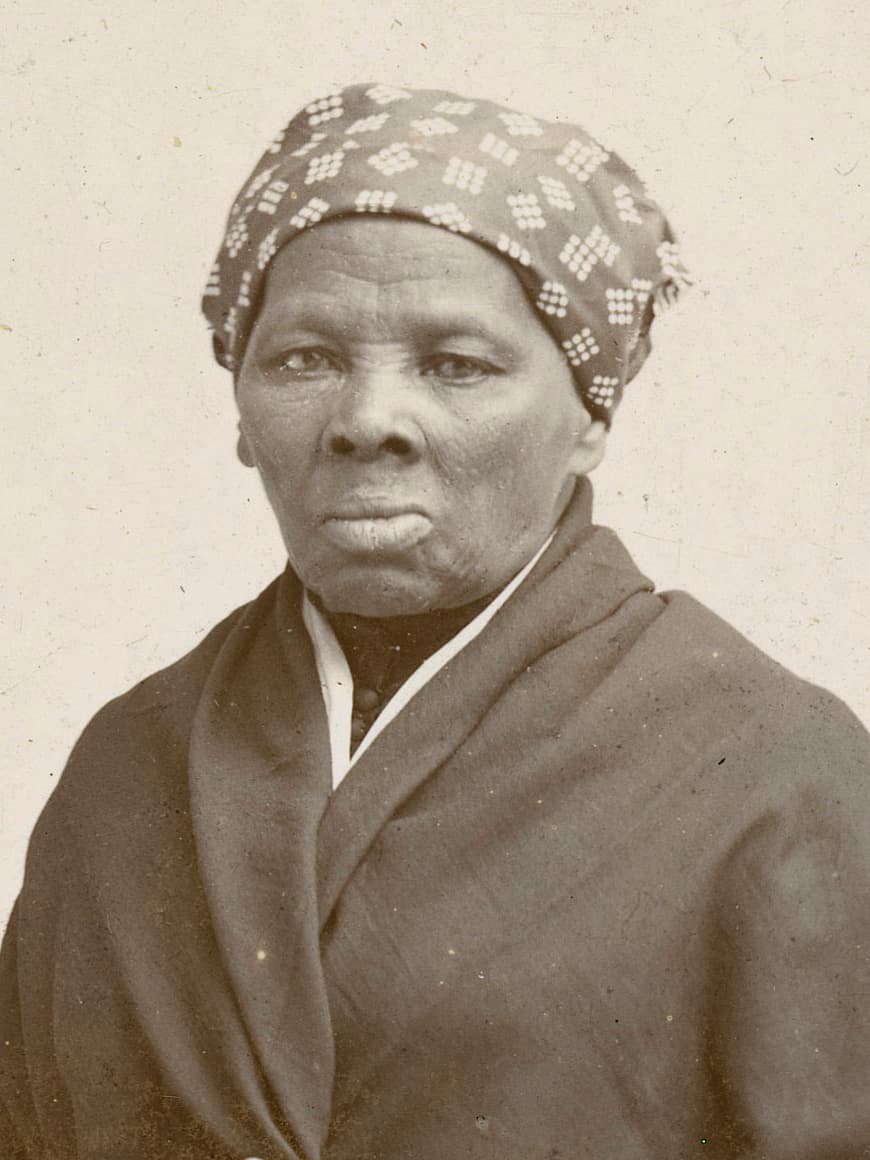 Wikimedia Commons
Harriet Tubman: Full Biography
Biography
1. Introduction
Harriet Tubman was one of the most influential figures in the American abolitionist movement. Born into slavery, she escaped and risked her life to help other enslaved people reach freedom. Her work with the Underground Railroad made her famous among abolitionists and established her as a symbol of resistance to slavery.
During the American Civil War, Tubman supported the Union cause in several roles, including nursing, scouting, intelligence gathering, and guiding military operations. After the war, she continued working for social justice, supporting African American rights and the movement for women's suffrage.
2. Early Life and Birth
Harriet Tubman was born Araminta Ross around 1822 in Dorchester County, Maryland, United States. The exact date of her birth is uncertain because records of enslaved people were often incomplete.
She was born into a family held in slavery. Her parents, Harriet Green and Ben Ross, lived under a system that denied enslaved people basic freedoms, separated families, and forced them to work without compensation.
Tubman spent her early years performing demanding labor. Her experiences under slavery shaped her determination to escape and help others gain their freedom.
3. Family Background
Tubman's parents and siblings lived under the constant threat of separation through the sale or transfer of enslaved people. Such separations were common under American slavery and caused lasting harm to families.
Her mother, Harriet Green, worked to protect her children despite the severe restrictions imposed on enslaved families. Her father, Ben Ross, worked as a laborer and timber worker.
The conditions her family endured helped shape Tubman's understanding of freedom and the importance of keeping families together.
4. Childhood Under Slavery
As a child, Tubman was forced to work in households and on farms. Her responsibilities included domestic labor, caring for children, and other physically demanding tasks.
She received little formal education because enslaved people were generally denied access to schooling. Instead, she developed practical skills and learned to navigate the local landscape.
The brutality of slavery affected her health and well-being. One of the most serious incidents occurred when she was still a teenager, leaving her with a lifelong head injury and episodes of pain, dizziness, and sudden sleep.
5. The Head Injury
During her adolescence, Tubman suffered a severe head injury after an overseer struck her with a heavy object intended for another enslaved person.
The injury caused long-term medical problems, including headaches, fainting spells, and periods of deep sleep. These difficulties continued throughout her life.
Although the injury placed additional burdens on her, Tubman continued working and eventually became known for her extraordinary determination and courage.
6. Marriage and Personal Name
Around 1844, Tubman married John Tubman, a free Black man. Because slavery laws differed according to a person's legal status, their marriage did not protect Harriet from being sold or separated from her husband.
At some point, she adopted the name Harriet, likely in honor of her mother. After escaping slavery, she became widely known by the surname Tubman.
Her marriage to John Tubman did not result in their escaping together. When she later returned to Maryland, she discovered that he had formed a new relationship.
7. Escape from Slavery
In 1849, Tubman escaped from slavery in Maryland. Facing the danger of capture, she traveled north toward states where slavery had been abolished.
Her escape required careful planning, courage, and assistance from people willing to help freedom seekers. She eventually reached Philadelphia, Pennsylvania, where she could live as a free woman.
However, freedom did not mean she could safely forget her family and friends who remained enslaved. Tubman decided to return to the South and help others escape.
8. The Underground Railroad
The Underground Railroad was not a literal railway. It was a network of people, safe houses, routes, and secret arrangements that helped enslaved people escape to free states and, in some cases, Canada.
Tubman became one of its best-known conductors. She returned repeatedly to Maryland, helping relatives and other enslaved people travel north.
Her missions were dangerous because capture could lead to severe punishment or death. Despite the risks, she continued her work and earned a reputation for determination and careful planning.
9. Rescue Missions and Family Reunions
Tubman made numerous journeys back to slaveholding territory to help people escape. Among those she assisted were members of her own family.
Her rescue missions required her to assess routes, avoid slave catchers, and make difficult decisions under pressure. She often traveled at night and relied on trusted contacts.
The exact number of people she personally guided is not fully documented, but historical accounts commonly credit her with helping around 70 people escape directly over multiple missions. She also advised and inspired many others who sought freedom.
10. The Fugitive Slave Act
The Fugitive Slave Act of 1850 increased the danger facing Tubman and other freedom seekers. The law required escaped enslaved people to be returned to their enslavers, even when they reached free states.
It also penalized people who helped them escape and denied alleged fugitives important legal protections.
Because of this law, Tubman increasingly guided people toward Canada, where they could escape the reach of American slaveholders and federal fugitive slave enforcement.
11. Life in Canada
Tubman helped several groups of freedom seekers travel to Canada, particularly areas of present-day Ontario, where slavery had been abolished throughout the British Empire.
Canadian communities became important destinations for people escaping slavery in the United States. These communities offered opportunities to establish new lives, although freedom seekers still faced racism and economic challenges.
Tubman's work connected the struggle against American slavery with a broader international network of abolitionists and supporters.
12. Relationship with Abolitionists
Tubman worked within a wider network of abolitionists, including people who offered shelter, money, transportation, and other assistance to freedom seekers.
She became associated with prominent antislavery activists such as William Still and Frederick Douglass. Her courage and practical experience earned respect among people working to end slavery.
Tubman was not simply a symbol of the movement; she played an active operational role in helping people escape and making the Underground Railroad function.
13. The American Civil War
The American Civil War began in 1861, following the secession of Southern states and the conflict over slavery and the preservation of the Union.
Tubman offered her services to the Union cause. She initially worked as a nurse and cook, caring for soldiers and formerly enslaved people who reached Union-controlled areas.
Her knowledge of the South, her ability to travel discreetly, and her understanding of enslaved communities made her valuable to Union efforts.
14. Scout and Intelligence Work
Tubman later served as a scout and intelligence operative for the Union Army. She helped gather information about Confederate positions and movements and worked with people who could provide information from within Southern communities.
Her wartime activities were particularly significant because women, especially Black women, had limited formal access to military leadership and recognition.
Tubman's experience navigating dangerous territory during her Underground Railroad missions helped prepare her for intelligence work during the war.
15. The Combahee River Raid
In June 1863, Tubman participated in the Union military operation known as the Combahee River Raid in South Carolina.
Working with Union Colonel James Montgomery and other personnel, she helped provide intelligence and guide the operation through the local waterways. The raid destroyed Confederate supplies and resulted in the liberation of more than 700 enslaved people, according to commonly cited historical accounts.
The operation became an important part of Tubman's wartime legacy and demonstrated the contribution of Black women to Union military efforts.
16. Work as a Nurse
Tubman also served as a nurse during the Civil War. She cared for sick and wounded soldiers and assisted formerly enslaved people who had reached Union lines.
She used practical knowledge of plants and traditional remedies to help treat some illnesses. Her nursing work took place amid severe shortages of medical supplies and difficult living conditions.
Her service reflected her wider commitment to helping people affected by slavery and war.
17. Emancipation and the End of Slavery
The Emancipation Proclamation, issued by President Abraham Lincoln in 1863, declared enslaved people in designated areas in rebellion against the United States to be free. It did not immediately abolish slavery throughout the country.
Slavery was abolished nationally in 1865 with the ratification of the Thirteenth Amendment to the United States Constitution.
For Tubman, the end of slavery was a major achievement, but it did not eliminate racial discrimination, economic inequality, or the challenges faced by formerly enslaved people.
18. Life After the Civil War
After the Civil War, Tubman settled in Auburn, New York, where she continued her work in support of African Americans and people in need.
She faced financial difficulties and spent years seeking compensation for her military service. Recognition of her wartime contributions was limited for a long time, despite the risks she had taken.
She also helped support family members and remained involved in reform movements.
19. Support for Women's Suffrage
Tubman supported the movement to secure voting rights for women. She worked alongside activists who argued that women should have a voice in political decisions.
She attended suffrage meetings and became a respected figure among advocates for women's rights. Her participation connected the struggle against slavery with wider movements seeking equal citizenship and political participation.
Tubman's work demonstrated that her commitment to freedom extended beyond the abolition of slavery.
20. The Harriet Tubman Home
In her later years, Tubman helped establish a home for elderly and needy African Americans. She eventually donated land for a home for older people in Auburn, New York, working with supporters to develop the project.
The effort reflected her concern for people who lacked family support, financial security, or access to care.
Her commitment to service continued even when her own resources were limited.
21. Later Years and Health
Tubman experienced health difficulties throughout her life, including the lasting effects of her adolescent head injury. As she grew older, she also faced financial insecurity.
Despite these challenges, she remained respected by abolitionists, veterans, and reformers. Her life story increasingly became a source of inspiration for people working for racial justice and women's rights.
She continued to live in Auburn, where she remained connected to her community and charitable activities.
22. Death
Harriet Tubman died on 10 March 1913 in Auburn, New York, at approximately 90 years of age, although her exact birth year is uncertain.
She received a military-style funeral and was buried at Fort Hill Cemetery in Auburn.
Her death marked the end of a life dedicated to freedom, humanitarian service, and the struggle for equality.
23. Recognition and Historical Legacy
Tubman's contributions were recognized increasingly in the decades following her death. Schools, museums, historical sites, and organizations have been named in her honor.
Her life has been commemorated through books, biographies, documentaries, and films. The Harriet Tubman Underground Railroad National Historical Park in Maryland preserves sites connected to her early life and escape, while the Harriet Tubman National Historical Park in Auburn, New York, honors her later life and humanitarian work.
Her story remains a central part of American history education and the study of abolitionism.
24. Harriet Tubman in Popular Culture
Tubman has appeared in numerous books, plays, films, and educational programs. These portrayals often focus on her escape from slavery, her Underground Railroad missions, and her service during the Civil War.
The 2019 film Harriet introduced her story to a new generation of viewers, dramatizing her escape and rescue missions.
While popular portrayals sometimes simplify complex historical events, Tubman's life continues to generate interest because of her courage and direct involvement in the struggle against slavery.
25. Conclusion
Harriet Tubman transformed her escape from slavery into a lifelong campaign for freedom and human dignity. Through the Underground Railroad, she helped enslaved people escape bondage, and during the Civil War she contributed to Union military efforts as a nurse, scout, and intelligence operative.
After slavery ended, she continued supporting African American rights, women's suffrage, and care for vulnerable people. Her life stands as a powerful example of courage, practical leadership, and commitment to justice.
Today, Harriet Tubman remains one of the most celebrated figures in the history of American abolitionism and the broader struggle for equality.
Did you know?
**Did You Know?** - Harriet Tubman was born into slavery in Maryland around 1822, but the exact date of her birth is unknown. - She escaped slavery in 1849 and later returned to help other enslaved people reach freedom. - She became one of the best-known conductors on the Underground Railroad. - During the American Civil War, she served as a nurse, scout, and intelligence operative for the Union. - In 1863, she helped support the Combahee River Raid in South Carolina, which freed more than 700 enslaved people. - She advocated for women's suffrage as well as African American rights. - She established a home for elderly and needy African Americans in her later years. - She died in Auburn, New York, on 10 March 1913.