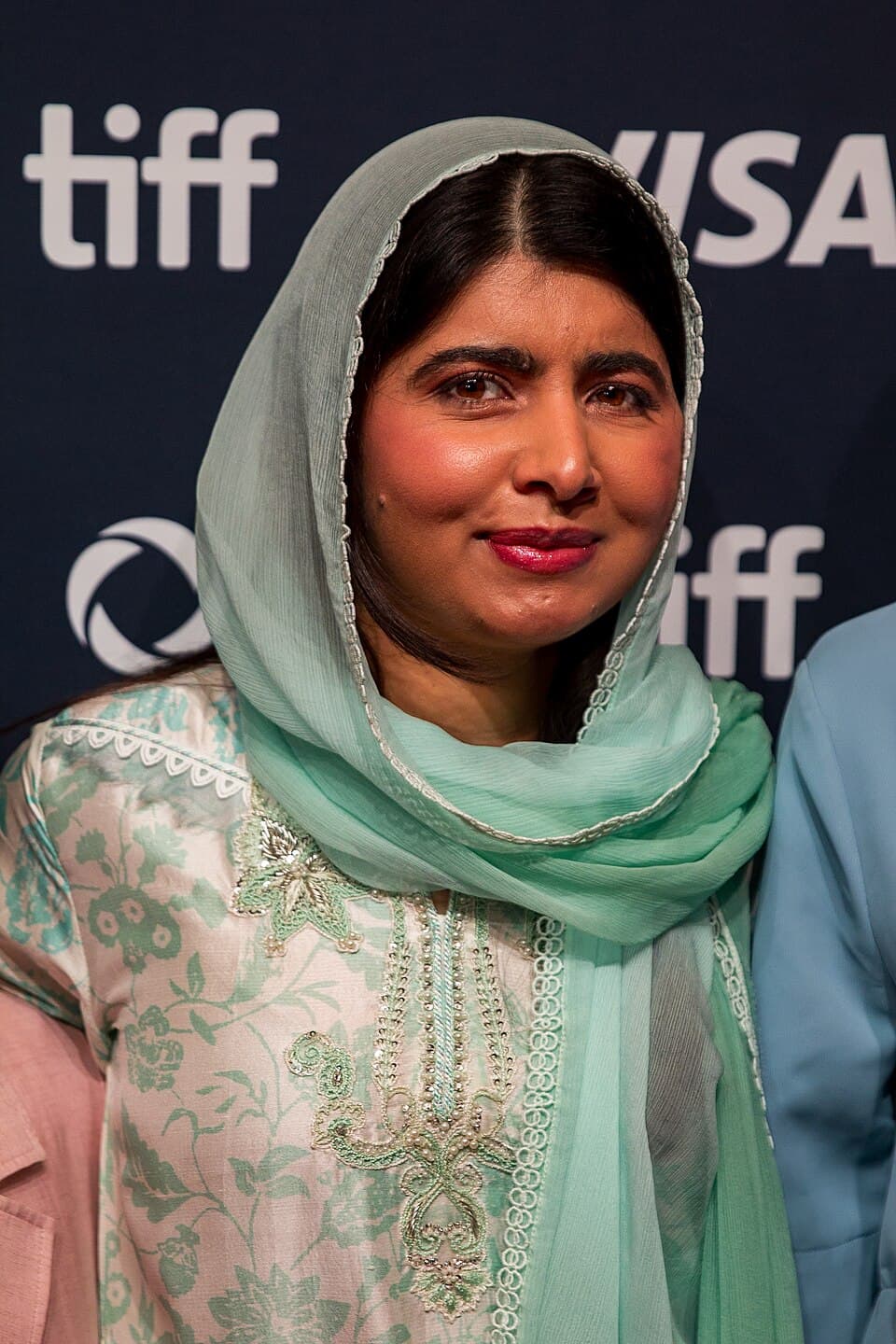
Activist · United States
Gloria Steinem
Gloria Steinem (born March 25, 1934) is an American journalist, author, feminist, and social activist who became one of the most prominent figures of the second-wave feminist movement in the United States. She co-founded *Ms.* magazine and helped establish organizations advocating for women's rights, gender equality, and social justice. Through her writing, public speaking, and activism, Steinem has influenced discussions about reproductive rights, workplace equality, and women's representation in society.
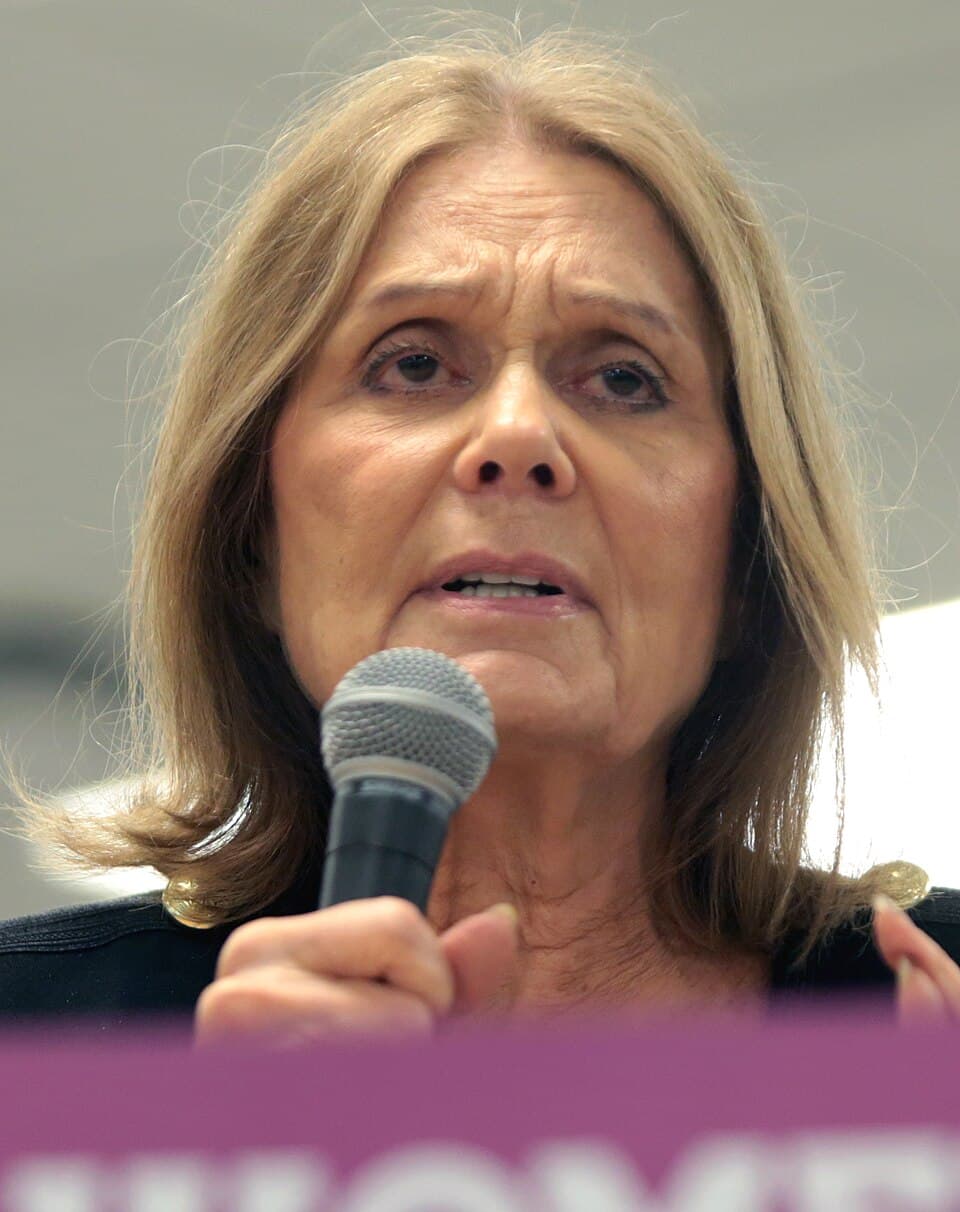 Wikimedia Commons
Gloria Steinem: Full Biography
Biography
Early Life and Birth
Gloria Marie Steinem was born on March 25, 1934, in Toledo, Ohio, United States. She became a journalist, author, and prominent feminist organizer whose work helped shape the modern women's rights movement.
Her childhood was unusual because her family frequently traveled. Her father worked as a traveling salesman, and the family spent periods moving between different locations. These experiences exposed her to different communities and ways of life.
Family Background
Gloria was the daughter of Leo Steinem and Ruth Steinem. She had an older sister, Susanne.
Her parents separated in 1944, when Gloria was about ten years old. After the separation, she spent considerable time helping care for her mother, whose health difficulties placed additional responsibilities on the family.
These early experiences influenced her understanding of women's responsibilities, family life, and the social challenges faced by women.
Education and Academic Achievements
Steinem eventually attended Waite High School in Toledo before enrolling at Smith College in Northampton, Massachusetts.
She studied government and graduated in 1956 with high academic honors. Her education strengthened her interest in politics, public affairs, and social institutions.
After graduation, she received a Chester Bowles Fellowship that enabled her to travel to India for approximately two years. This experience introduced her to grassroots organizing and nonviolent political activism.
Influence of India
Steinem's time in India played an important role in the development of her political outlook. She observed community-based activism and learned about approaches to social change influenced by Mahatma Gandhi.
She became increasingly interested in how ordinary people could organize to challenge unequal social structures. These experiences later informed her approach to feminist organizing, which emphasized public participation, discussion, and collective action.
Beginning Her Journalism Career
After returning to the United States, Steinem settled in New York City and began working as a freelance journalist.
During the late 1950s and early 1960s, women journalists frequently encountered barriers in newsrooms dominated by men. Steinem initially received assignments focused on lifestyle and women's interests, but she sought opportunities to report on politics and broader social issues.
Her persistence gradually helped her establish herself as a journalist capable of examining controversial subjects and challenging conventional assumptions.
The Playboy Club Investigation
In 1963, Steinem gained national attention through her article “I Was a Playboy Bunny,” published in Show magazine.
For the report, she worked undercover as a Playboy Club waitress to investigate working conditions. Her account described workplace expectations, pay, appearance requirements, and the experiences of women employed at the club.
The article became one of her best-known early journalistic investigations. It also demonstrated her willingness to use firsthand reporting to examine the gap between glamorous public images and workers' actual experiences.
Work at New York Magazine
In 1968, Steinem helped found New York magazine. She worked as a political writer and columnist, covering public affairs, social change, and emerging feminist ideas.
The publication provided a platform for her to explore subjects beyond traditional lifestyle journalism. Her writing increasingly addressed the unequal treatment of women and the ways social institutions shaped their opportunities.
By the end of the 1960s, she was becoming a recognizable voice in discussions about women's liberation.
Becoming a Feminist Activist
Steinem's engagement with feminism grew through her journalism and participation in political discussions. In 1969, she spoke publicly at an event supporting the legalization of abortion in New York.
During this period, she shared her own experience of obtaining an abortion in Britain when she was 22. Her decision to speak openly about a subject that was heavily stigmatized helped connect her personal story with a wider debate about women's autonomy and reproductive rights.
She increasingly combined journalism with public speaking, organizing, and political advocacy.
Founding Ms. Magazine
One of Steinem's most significant achievements was helping establish Ms. magazine.
The publication first appeared as an insert in New York magazine in December 1971. Its first independent issue was published in 1972, offering a national platform for feminist writing, reporting, and debate.
Steinem worked with other journalists and activists, including Patricia Carbine and Letty Cottin Pogrebin, to develop the magazine. Ms. covered subjects such as employment discrimination, domestic violence, reproductive rights, politics, and women's experiences in everyday life.
The magazine helped bring feminist ideas to a broad readership and challenged the assumption that women's publications should focus primarily on domestic life and fashion.
National Women's Political Caucus
In 1971, Steinem joined other prominent activists and political leaders in co-founding the National Women's Political Caucus.
The organization sought to increase women's participation in political life and encourage more women to seek elected and appointed office. Its founders included Bella Abzug, Shirley Chisholm, Betty Friedan, and other advocates for women's political representation.
The caucus reflected Steinem's belief that social change required participation not only in public demonstrations and journalism but also in political institutions.
Ms. Foundation for Women
Steinem helped establish the Ms. Foundation for Women, which supported organizations working to improve the lives of women and girls.
The foundation focused on strengthening grassroots initiatives and supporting communities whose needs were often overlooked by larger institutions. Its work connected feminist principles with practical efforts addressing economic inequality, education, leadership, and social justice.
Through this and other organizations, Steinem supported a model of activism that emphasized collaboration among women from different backgrounds.
Advocacy for the Equal Rights Amendment
Steinem became an active supporter of the Equal Rights Amendment (ERA), a proposed amendment to the United States Constitution intended to guarantee equality of rights under the law regardless of sex.
She traveled extensively, spoke at public events, and helped mobilize support for constitutional equality. Although Congress approved the amendment in 1972, it did not receive ratification from the required number of states within the original deadline.
The campaign nevertheless helped keep questions of gender equality, discrimination, and constitutional rights at the center of American public debate.
Reproductive Rights and Women's Autonomy
Reproductive rights became a major part of Steinem's activism. She argued that women should have the ability to make decisions about pregnancy and their own bodies.
She supported organizations and campaigns defending abortion rights and access to reproductive health services. Her work helped bring personal experiences into public discussions that had often been shaped by stigma and silence.
Her advocacy formed part of a broader feminist movement that connected reproductive autonomy with women's economic independence, educational opportunities, and participation in public life.
Intersectionality and Social Justice
Steinem's activism increasingly addressed the connections between sexism, racism, economic inequality, and other forms of discrimination.
She worked with activists from diverse communities and supported efforts to make feminist organizing more inclusive. Her public work emphasized that women's experiences differed according to race, class, nationality, and social circumstances.
Although debates continued within the feminist movement about priorities and representation, Steinem remained involved in efforts to build coalitions across social and political boundaries.
Books and Literary Contributions
Steinem authored several influential books and collections of essays. Her writing examined feminism, identity, political organizing, media representation, and the personal experiences that shape public life.
Among her notable works are Outrageous Acts and Everyday Rebellions, Moving Beyond Words, Revolution from Within, and My Life on the Road.
Her book My Life on the Road, published in 2015, reflected on decades of travel, conversations, and organizing. It explored how listening to people and sharing experiences could help build social movements.
She also wrote Marilyn: Norma Jean, a book examining the life of Marilyn Monroe and the relationship between public image, gender, and personal identity.
The Women's Media Center
In 2005, Steinem co-founded the Women's Media Center with other feminist leaders, including Jane Fonda and Robin Morgan.
The organization works to increase women's visibility and influence in journalism, entertainment, and other media industries. It also addresses how women are represented in news coverage and public discussion.
The center reflected Steinem's longstanding belief that the media plays a major role in shaping social expectations and determining whose experiences receive attention.
Take Our Daughters to Work Day
Steinem supported the creation and expansion of Take Our Daughters to Work Day, an initiative introduced in the early 1990s to expose girls to professional environments and career possibilities.
The program encouraged girls to imagine themselves in a wide range of occupations and challenged assumptions about the roles available to women.
It became a widely recognized educational initiative and later developed to include boys as well.
Marriage and Personal Life
Steinem married entrepreneur and activist David Bale in 2000, when she was 66 years old. It was her first marriage.
Bale was the father of actor Christian Bale. David Bale died of brain lymphoma in 2003, after a relatively short marriage.
Steinem continued to emphasize the importance of personal independence and meaningful relationships while maintaining a demanding schedule of writing, speaking, and activism.
Presidential Medal of Freedom
In 2013, President Barack Obama awarded Steinem the Presidential Medal of Freedom, the highest civilian honor in the United States.
The award recognized her longstanding contributions to journalism, women's rights, and public life. Over several decades, she had helped bring feminist issues into mainstream political and cultural discussion.
She also received numerous other honors, including recognition from journalism organizations and institutions dedicated to civil rights and women's history.
Later Years and Continued Activism
In her later years, Steinem continued to speak, write, participate in public events, and support younger generations of activists.
She remained associated with Ms. magazine and other organizations working on equality, reproductive rights, and women's representation. Her public appearances often connected the history of the women's movement with contemporary debates about social justice.
She also encouraged younger activists to build relationships across generations and to recognize the importance of collective action.
Death and Public Tributes
Gloria Steinem died on September 2, 2026, at her home in New York City, at the age of 92.
Her death prompted tributes from journalists, activists, political figures, and organizations associated with the women's rights movement. Many reflected on her role in bringing feminist ideas into public discussion and building institutions that supported women's voices.
Her passing marked the end of a public career that spanned more than six decades, although the organizations and movements she helped shape continue their work.
Legacy and Historical Importance
Steinem became one of the most recognizable figures of second-wave feminism in the United States. Her work combined journalism, political organizing, public speaking, and institution-building.
Her influence can be seen in the continued discussion of workplace discrimination, reproductive autonomy, women's political participation, and media representation. She also helped create platforms through which activists could exchange ideas and bring overlooked experiences to wider audiences.
Her legacy is part of a much broader history of feminist activism involving many organizers, writers, labor leaders, and community movements. Her contribution was especially notable for connecting public communication with sustained political and organizational work.
Conclusion
Gloria Steinem helped reshape public conversations about gender equality through her journalism, writing, and activism. From her early reporting to the founding of Ms. magazine and the organizations she helped build, she worked to expand women's participation in public life.
Her life reflected the importance of storytelling, collective organizing, and sustained advocacy. After her death in 2026, her work remained a significant part of the history of modern feminism and the continuing struggle for equality.
Did you know?
- Gloria Steinem helped found *New York* magazine in 1968 and co-founded *Ms.* magazine, which became an influential feminist publication. - Her 1963 article “I Was a Playboy Bunny” was based on undercover reporting at a Playboy Club. - She studied government at Smith College and graduated with honors in 1956. - Her travels in India exposed her to grassroots organizing and ideas influenced by Gandhi's nonviolent activism. - In 2013, she received the Presidential Medal of Freedom from President Barack Obama. - She married for the first time at age 66, when she wed David Bale in 2000.