Comedian · United States
George Carlin
# Short Bio George Carlin was an American stand-up comedian, actor, author, and social critic known for his sharp wit, provocative humor, and insightful commentary on politics, religion, language, and American culture. Born George Denis Patrick Carlin on May 12, 1937, in New York City, he became one of the most influential comedians of the 20th century. His famous routine, “Seven Words You Can Never Say on Television,” sparked a major debate about freedom of speech and broadcast censorship in the United States. Carlin released numerous comedy albums and HBO specials, appeared in films such as *Bill & Ted’s Excellent Adventure* and *Dogma*, and wrote bestselling books including *Brain Droppings*. He received five Grammy Awards for comedy recordings and was posthumously awarded the Mark Twain Prize for American Humor in 2008. He died on June 22, 2008, at the age of 71.
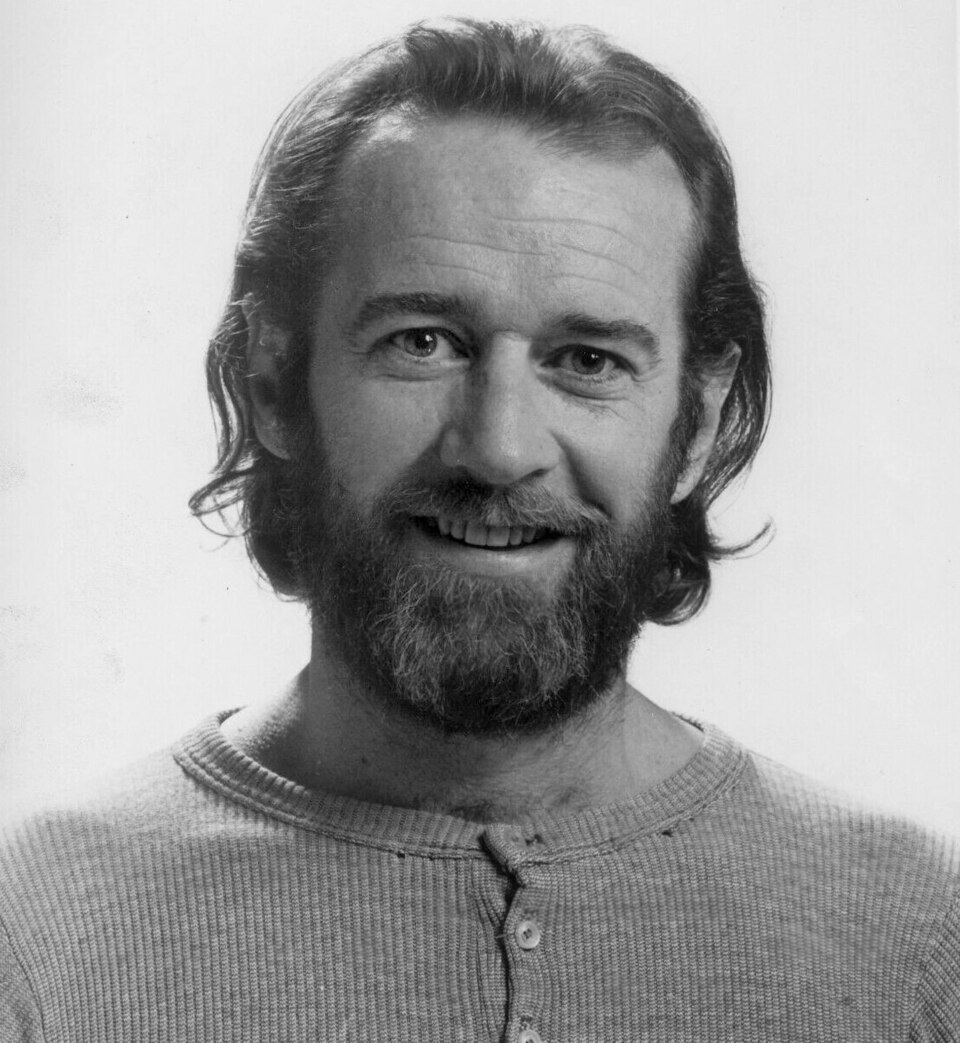 Wikimedia Commons
George Carlin: Full Biography
Biography
1. Introduction
George Carlin was an American stand-up comedian, actor, writer, and social critic celebrated for his fearless humor and observations about modern life. Over a career spanning nearly five decades, he challenged social conventions, questioned authority, explored the complexities of language, and examined the contradictions of American society.
Carlin became known for combining observational comedy with political satire, philosophical questions, dark humor, and wordplay. His performances frequently addressed subjects that other entertainers avoided, making him a prominent figure in discussions about comedy, censorship, and freedom of expression.
2. Early Life and Family Background
George Denis Patrick Carlin was born on May 12, 1937, in New York City, United States. He grew up primarily in Manhattan's Morningside Heights neighborhood with his mother, Mary Carlin, and his older brother, Patrick. His parents separated when he was an infant, and his mother raised the children while working to support the family.
Carlin attended Catholic schools during his childhood. His experiences growing up in a religious environment later influenced his views on organized religion and authority, which became recurring subjects in his comedy.
He showed an early interest in language, radio, impersonations, and performance. Listening to radio programs helped him develop an appreciation for voices, storytelling, and comic timing. These interests eventually guided him toward a career in broadcasting and entertainment.
3. Education and Military Service
Carlin attended school in New York but left high school before graduating. At the age of 17, he joined the United States Air Force in 1954 and trained as a radar technician. While stationed in Shreveport, Louisiana, he also worked as a radio disc jockey.
His military service was troubled by disciplinary problems, and he received a general discharge in 1957. Although his time in the Air Force was relatively short, working at a radio station helped him gain valuable broadcasting experience.
After leaving the military, Carlin worked at radio stations in Boston and Texas. These jobs allowed him to develop his microphone presence, experiment with humor, and gain experience entertaining audiences.
4. Beginning of His Comedy Career
In 1959, Carlin teamed up with radio personality Jack Burns. Together, they developed a comedy act that combined radio-style sketches, character voices, satire, and observational humor.
The duo performed in nightclubs and appeared on television, including The Tonight Show with Jack Paar. Their early success gave Carlin valuable exposure and helped him establish connections in the entertainment industry.
After the partnership ended in 1962, Carlin continued performing as a solo comedian. During the early 1960s, his style was relatively conventional compared with the more provocative material that would later make him famous.
He gradually moved toward more experimental comedy, performing in clubs and coffeehouses where he could explore social criticism, counterculture ideas, and unconventional characters.
5. Rise to Television Fame
During the 1960s, Carlin became a familiar face on American television. He appeared on programs hosted by entertainers such as Ed Sullivan, Mike Douglas, and Merv Griffin, and he made numerous appearances on The Tonight Show.
One of his early popular characters was the Hippy Dippy Weatherman, a parody of television weather presenters. His other routines featured distinctive voices, absurd situations, and playful commentary on everyday life.
Carlin initially presented himself in a more traditional entertainment style, often wearing a suit and tie. As his career progressed, he changed his appearance and performance approach, embracing longer monologues, more direct social criticism, and a less conventional stage persona.
6. The Transformation of His Comedy Style
In the late 1960s and early 1970s, Carlin moved away from mainstream nightclub comedy and developed a more personal and outspoken style. He grew his hair and beard, adopted a more relaxed appearance, and began addressing subjects such as politics, religion, consumerism, social hypocrisy, and the use of language.
This transformation coincided with broader cultural changes in the United States. Carlin's work increasingly reflected his interest in questioning accepted beliefs and examining the relationship between individuals and institutions.
His comedy relied not only on punchlines but also on carefully constructed arguments, repetitions, wordplay, and observations that encouraged audiences to reconsider familiar ideas.
7. The Famous “Seven Dirty Words” Routine
One of Carlin's most widely discussed performances was “Seven Words You Can Never Say on Television.” The routine examined words considered obscene on broadcast television and questioned why certain expressions were treated differently from others.
Carlin was arrested in Milwaukee in 1972 following a performance connected with the routine. The controversy continued when a radio station broadcast a recording of the material, leading to a legal dispute over the regulation of indecent language on public airwaves.
In 1978, the United States Supreme Court ruled in FCC v. Pacifica Foundation that the Federal Communications Commission could regulate indecent broadcasts in certain circumstances. The decision became an important part of the history of American broadcast regulation and free-speech debates.
The routine strengthened Carlin's reputation as a comedian willing to challenge established rules. It also demonstrated how stand-up comedy could influence broader legal and cultural discussions.
8. Comedy Albums and Grammy Awards
Carlin released his first solo comedy album, Take-Offs and Put-Ons, in 1967. He subsequently recorded numerous albums that captured his evolving performance style and expanded his audience beyond live venues.
His 1972 album FM & AM became a major success and earned him his first Grammy Award for comedy recording. Other well-known recordings include Class Clown, Occupation: Foole, A Place for My Stuff, Jammin' in New York, and You Are All Diseased.
Carlin ultimately won five Grammy Awards for his comedy recordings, including awards associated with FM & AM, Jammin' in New York, Brain Droppings, Napalm & Silly Putty, and It's Bad for Ya.
His albums preserved his routines for audiences who could not attend his performances and helped establish stand-up comedy recordings as an important part of his legacy.
9. HBO Specials and Stand-Up Success
In 1977, Carlin filmed his first HBO comedy special, beginning a long relationship with the network. His televised performances allowed him to develop extended routines that were less restricted by the expectations of traditional network television.
Over the years, his specials covered a wide range of subjects, including American politics, everyday language, consumer culture, human behavior, and the contradictions of modern society.
Notable specials included Carlin at Carnegie, Jammin' in New York, You Are All Diseased, Life Is Worth Losing, and It's Bad for Ya.
His later material became increasingly philosophical and critical of American institutions. Rather than relying primarily on characters, he often delivered extended monologues that combined comedy with social commentary.
10. Film and Television Acting
Although Carlin was best known for stand-up comedy, he also established a career as an actor. One of his most recognizable film roles was Rufus in Bill & Ted's Excellent Adventure (1989) and its sequel, Bill & Ted's Bogus Journey (1991).
He appeared in Outrageous Fortune (1987), The Prince of Tides (1991), and Dogma (1999), in which he played Cardinal Glick, a religious figure involved in a satirical story about faith and organized religion.
Carlin also became known to younger audiences through children's television. He played the conductor in Shining Time Station and narrated episodes of Thomas & Friends for several years.
In 2006, he voiced Fillmore, a peace-loving Volkswagen bus, in Pixar's animated film Cars. This role introduced his voice and personality to another generation of viewers.
11. Books and Writing Career
Carlin's interests extended beyond live performance and recorded comedy. He published books that brought his observations, jokes, and reflections to readers.
His 1997 book, Brain Droppings, became a bestseller and featured short essays, lists, jokes, and commentary on everyday life. It demonstrated how his distinctive voice could work on the printed page as well as on stage.
He followed it with Napalm & Silly Putty in 2001, another collection of observations and comic reflections. His writing often focused on the inconsistencies of language, the behavior of individuals, and the assumptions underlying American culture.
Carlin worked on his autobiography during the later years of his life. The book, Last Words, was published posthumously in 2009 with the assistance of writer Tony Hendra.
12. Personal Life and Family
Carlin married Brenda Hosbrook in 1961. The couple had one daughter, Kelly Carlin, who later became a writer and performer. Their marriage lasted until Brenda's death in 1997.
In 1998, Carlin married writer Sally Wade. They remained together until his death in 2008.
Carlin was often outspoken about religion, politics, and social institutions. He described himself as an atheist and frequently explored religious ideas through satire. His public persona was irreverent, but his work also showed a sustained interest in language, philosophy, and the ways people understand the world around them.
Despite his success, Carlin faced personal challenges, including periods of substance use and long-term heart problems. He continued to perform and write throughout much of his life.
13. Awards and Major Achievements
Carlin received significant recognition for his contributions to comedy and entertainment. His major achievements include:
- Five Grammy Awards: Recognizing his comedy albums and spoken-comedy recordings.
- Mark Twain Prize for American Humor: Selected as the 2008 recipient; the award was presented posthumously.
- Hollywood Walk of Fame: Received a star in 1987 for his contributions to entertainment.
- Television Academy recognition: Earned multiple Emmy nominations during his career.
- Bestselling author: His books, including Brain Droppings and Napalm & Silly Putty, reached a wide readership.
- Historic television appearance: Hosted the first episode of Saturday Night Live when the show premiered in October 1975.
These achievements reflect the breadth of his career across stand-up comedy, television, film, recording, and writing.
14. Final Years and Death
Carlin continued performing well into the 2000s, producing new comedy specials that reflected his increasingly philosophical and critical perspective.
His final HBO special, It's Bad for Ya, was filmed in 2008. The performance addressed aging, social expectations, mortality, and the contradictions of everyday life.
On June 22, 2008, Carlin died of heart failure in Santa Monica, California, at the age of 71. He had experienced heart problems for many years.
Shortly before his death, he had been selected to receive the Mark Twain Prize for American Humor. The honor was awarded posthumously later that year, recognizing his enduring contributions to American comedy.
15. Influence on Comedy and Free Expression
George Carlin influenced generations of comedians through his approach to language, social criticism, and long-form stand-up performance. His routines demonstrated that comedy could be both entertaining and intellectually challenging.
He frequently questioned the language used by politicians, advertisers, the media, and ordinary people. By examining how words shape thought, he encouraged audiences to look beyond familiar expressions and consider the assumptions behind them.
His “Seven Dirty Words” routine became a lasting reference point in discussions about censorship and the boundaries of public expression. The legal controversy surrounding the routine helped make his name part of a broader national debate about broadcasting standards.
Carlin's influence can also be seen in the work of comedians who combine observational humor with cultural criticism and philosophical reflection.
16. Legacy
George Carlin remains widely remembered for his distinctive voice, sharp observations, fearless approach to controversial subjects, and extensive body of recorded work.
His comedy explored subjects ranging from ordinary habits and language to politics, religion, consumerism, and the nature of human behavior. His books and recorded performances continue to introduce his ideas to new audiences.
Rather than treating comedy as entertainment alone, Carlin used it as a means of examining accepted beliefs and exposing contradictions in everyday life. His work helped expand the possibilities of stand-up comedy and remains an important part of American entertainment history.
17. Conclusion
George Carlin built a remarkable career through his ability to observe, question, and satirize the world around him. From his early radio work and television appearances to his influential stand-up specials, films, and bestselling books, he developed a distinctive voice that crossed generations.
His Grammy-winning recordings, landmark free-speech controversy, and posthumous Mark Twain Prize reflect the lasting impact of his work. George Carlin's legacy endures through his recordings, writing, and the continuing influence of his approach to comedy and social commentary.
Did you know?
# Did You Know? — George Carlin - **He hosted the first episode of *Saturday Night Live*.** Carlin appeared as the host when the show premiered on October 11, 1975. - **His comedy influenced a Supreme Court case.** His “Seven Dirty Words” routine became central to the 1978 *FCC v. Pacifica Foundation* decision concerning indecent language on public broadcasts. - **He won five Grammy Awards.** His comedy recordings received recognition across several decades. - **He began his career in radio.** Before becoming a celebrated comedian, he worked as a disc jockey and teamed up with Jack Burns. - **He played Rufus in *Bill & Ted*.** His role as a time-traveling guide introduced him to audiences beyond stand-up comedy. - **He voiced Fillmore in *Cars*.** The 2006 Pixar film featured Carlin as a relaxed, environmentally conscious Volkswagen bus. - **He wrote bestselling books.** *Brain Droppings* and *Napalm & Silly Putty* brought his humor and social observations to readers. - **He received the Mark Twain Prize posthumously.** He was selected for the 2008 award honoring his contribution to American humor. - **His career lasted nearly five decades.** He continued performing and developing new material until shortly before his death in June 2008.