Comedian · United States
Gene Wilder
Gene Wilder was an American actor, comedian, screenwriter, director, and author best known for his unforgettable performances in *Willy Wonka & the Chocolate Factory*, *Young Frankenstein*, and *Blazing Saddles*. Born Jerome Silberman on June 11, 1933, he became one of Hollywood’s most distinctive comedic performers, admired for his expressive face, nervous energy, and unique blend of humor and sensitivity. Wilder frequently collaborated with director Mel Brooks and actor Richard Pryor. Throughout his career, he earned critical acclaim for his performances in comedy and drama. He died on August 29, 2016, leaving behind a lasting legacy in American cinema.
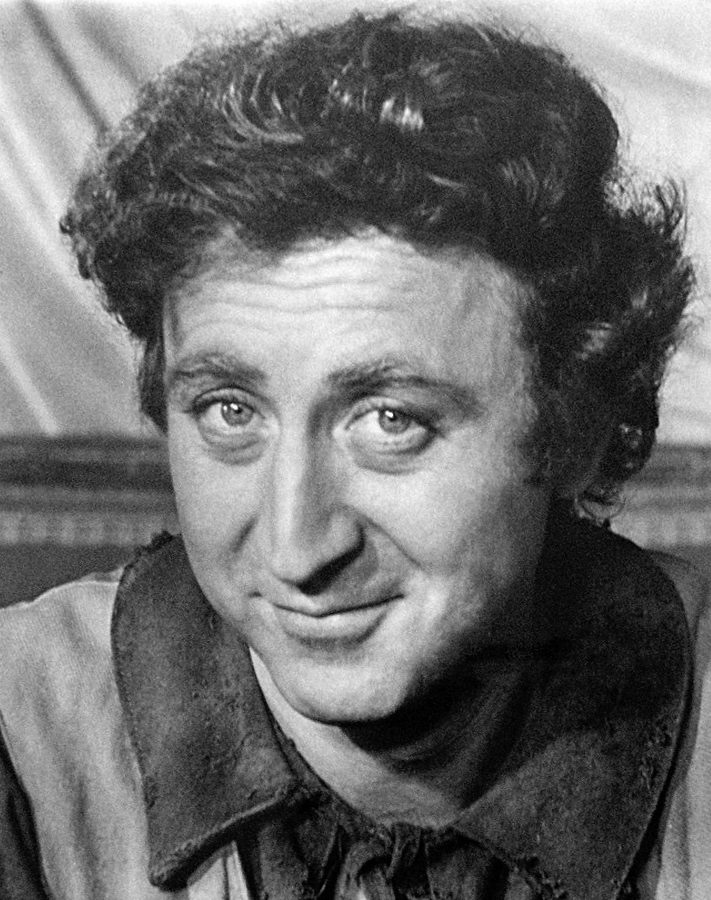 Wikimedia Commons
Gene Wilder Biography: Life, Career, Movies, and Legacy
Biography
1. Introduction
Gene Wilder was an American actor, comedian, screenwriter, director, and author celebrated for his extraordinary talent in comedy. With his expressive eyes, distinctive voice, and ability to balance absurd humor with genuine emotion, he became one of the most recognizable performers in American film history.
Wilder achieved worldwide fame for playing Willy Wonka in Willy Wonka & the Chocolate Factory (1971). He also starred in celebrated comedies such as The Producers, Blazing Saddles, and Young Frankenstein. His performances often combined eccentricity, vulnerability, and impeccable comedic timing.
2. Early Life and Family Background
Gene Wilder was born Jerome Silberman on June 11, 1933, in Milwaukee, Wisconsin, United States. He grew up in a Jewish family and developed an interest in acting during his childhood.
His mother, Jeanne Baer, experienced serious health difficulties, and Wilder later explained that seeing her illness influenced his early interest in making people laugh. His father, William J. Silberman, worked as a manufacturer and salesman of novelty items.
Wilder attended Washington High School in Milwaukee. His early experiences helped shape the emotional sensitivity and theatrical instincts that later became central to his acting style.
3. Education and Acting Training
Wilder pursued formal training in theater and studied communication and the performing arts. He attended the University of Iowa, where he graduated in 1955 with a degree in communication and theater arts.
After completing his university education, he continued developing his acting skills in the United States and England. He studied at the Bristol Old Vic Theatre School in England and trained in stage performance.
These experiences strengthened his theatrical technique and prepared him for a professional career in theater, television, and film.
4. Early Career in Theater and Television
Before becoming a major Hollywood star, Wilder worked extensively in theater. He performed in stage productions and developed a reputation for combining dramatic ability with subtle comic expression.
During the 1960s, he appeared in television productions and theatrical performances while seeking opportunities in film. His stage background helped him develop precise timing, controlled physical comedy, and the ability to communicate complex emotions through small gestures.
A major turning point came when he was cast in the Broadway production of Mother Courage and Her Children, where he worked alongside actress Anne Bancroft. Through Bancroft, he eventually met her partner, director Mel Brooks, who would become one of his most important creative collaborators.
5. Breakthrough with The Producers
Wilder made his feature-film debut in Bonnie and Clyde (1967), appearing in a supporting role as Eugene Grizzard.
His major breakthrough came the same year when Mel Brooks cast him as Leo Bloom in The Producers. Wilder played a nervous accountant who becomes involved in an outrageous theatrical scheme.
His performance earned him an Academy Award nomination for Best Supporting Actor. The role introduced audiences to the combination of anxiety, sincerity, and comic intensity that would become his trademark.
The Producers also began a creative partnership with Brooks that produced several influential comedy films.
6. Becoming Willy Wonka
One of Wilder’s most famous performances came in Willy Wonka & the Chocolate Factory (1971), based on Roald Dahl’s children's novel Charlie and the Chocolate Factory.
As Willy Wonka, Wilder created a mysterious, unpredictable, and sometimes unsettling character. Rather than portraying Wonka as a straightforward children's entertainer, he gave the character a mixture of warmth, mischief, eccentricity, and ambiguity.
His performance became iconic, particularly because of his distinctive delivery and ability to shift between playful humor and emotional intensity. Although the film received mixed reactions upon its original release, it later developed a devoted following and became a beloved family classic.
Wilder's portrayal remains one of the defining interpretations of the character.
7. Collaboration with Mel Brooks
Gene Wilder and Mel Brooks collaborated on several influential comedy films. Their partnership helped shape the style of American screen comedy during the 1960s and 1970s.
Their notable projects included:
- The Producers (1967): Wilder played Leo Bloom, a timid accountant caught up in an outrageous theatrical scheme.
- Blazing Saddles (1974): He portrayed Jim, a quick-witted gunslinger known as the Waco Kid.
- Young Frankenstein (1974): Wilder starred as Dr. Frederick Frankenstein, a scientist who inherits his family's unusual legacy.
Young Frankenstein was especially significant because Wilder co-wrote the screenplay with Brooks. The film parodied classic horror movies while paying tribute to the genre, and it received widespread critical acclaim.
Their collaborations are remembered for combining absurd situations, sharp dialogue, satire, and memorable character performances.
8. Successful Partnership with Richard Pryor
Wilder also developed a successful on-screen partnership with comedian Richard Pryor. Their contrasting personalities and comedic styles created an effective dynamic.
They appeared together in four major films:
- Silver Streak (1976)
- Stir Crazy (1980)
- See No Evil, Hear No Evil (1989)
- Another You (1991)
In Silver Streak, Wilder played a book editor who becomes involved in a murder mystery during a train journey. Stir Crazy followed two friends who are wrongly imprisoned and attempt to survive their circumstances.
The films demonstrated Wilder's ability to work with different comedic styles, particularly when paired with Pryor's energetic and improvisational performance.
9. Other Notable Films and Directorial Work
Beyond his best-known collaborations, Wilder appeared in numerous films that showcased his versatility.
His notable movies included:
- Everything You Always Wanted to Know About Sex (1972)
- The Adventures of Sherlock Holmes' Smarter Brother (1975)
- The World's Greatest Lover (1977)
- The Woman in Red (1984)
- Haunted Honeymoon (1986)
Wilder also worked as a director and screenwriter. His directorial projects included The Adventure of Sherlock Holmes' Smarter Brother, The World's Greatest Lover, and Haunted Honeymoon.
In The Woman in Red, he played a married man who becomes infatuated with a model. The film became commercially successful and is particularly remembered for its music, including Stevie Wonder's song "I Just Called to Say I Love You."
His work behind the camera reflected his interest in character-driven comedy and romantic situations.
10. Television Career
Although Wilder was best known for his film work, he also appeared in television productions later in his career.
One of his most notable television roles was in the sitcom Will & Grace. He played Mr. Stein, a character who served as a professional rival to Will Truman. His performance earned him the Primetime Emmy Award for Outstanding Guest Actor in a Comedy Series in 2003.
This recognition demonstrated that his comedic talents remained effective across different entertainment formats.
11. Personal Life and Relationships
Gene Wilder married four times. His first three marriages were to Mary Mercier, Mary Joan Schutz, and actress Gilda Radner.
His marriage to Gilda Radner in 1984 became particularly well known. Radner was a celebrated comedian and original cast member of Saturday Night Live. The couple shared a strong personal and professional bond.
Radner was diagnosed with ovarian cancer and died in 1989. Her illness and death deeply affected Wilder. He later became involved in raising awareness about ovarian cancer and supporting efforts to improve early diagnosis.
In 1991, Wilder married Karen Webb, a speech-language pathologist. They remained married until his death.
Wilder valued his privacy and generally kept his personal life away from the spotlight.
12. Health and Later Years
In his later years, Wilder gradually withdrew from major film roles. He continued writing and pursuing personal interests, including literature and painting.
He was diagnosed with non-Hodgkin lymphoma in 1999. Following treatment, the disease went into remission, and he later spoke publicly about his recovery.
Wilder died on August 29, 2016, at his home in Stamford, Connecticut, at the age of 83. His family stated that he had been living with complications related to Alzheimer's disease.
His death prompted tributes from fellow actors, filmmakers, and admirers who celebrated his distinctive performances and contribution to comedy.
13. Awards and Recognition
Gene Wilder received numerous honors during his career.
His major achievements included:
- Academy Award nomination: Best Supporting Actor for The Producers (1967).
- Academy Award nomination: Best Adapted Screenplay for Young Frankenstein (1974), shared with Mel Brooks.
- Primetime Emmy Award: Outstanding Guest Actor in a Comedy Series for Will & Grace (2003).
- Golden Globe nomination: Best Actor in a Motion Picture – Musical or Comedy for Silver Streak (1976).
- Golden Globe nomination: Best Actor in a Motion Picture – Musical or Comedy for Stir Crazy (1980).
Beyond formal awards, Wilder received lasting recognition for his memorable characters and influence on generations of comedians and actors.
14. Writing Career
Wilder was also an accomplished author. In addition to writing screenplays, he published books that reflected his imagination, humor, and interest in storytelling.
His literary works included the memoir Kiss Me Like a Stranger: My Search for Love and Art (2005), in which he reflected on his personal life and artistic development.
He also wrote novels, including My French Whore (2007), The Woman Who Wouldn't (2008), and Something to Remember You By (2013).
His writing career demonstrated that his creativity extended beyond acting and filmmaking.
15. Influence on Comedy and Popular Culture
Gene Wilder helped establish a distinctive approach to screen comedy. Instead of relying entirely on exaggerated physical humor, he often portrayed characters whose anxiety, confusion, or emotional sincerity made absurd situations even funnier.
His collaborations with Mel Brooks helped popularize sophisticated parody and irreverent satire. His films also demonstrated how comedy could combine outrageous scenarios with carefully developed characters.
Wilder's portrayal of Willy Wonka continued to influence popular culture long after the film's release. His performance became a reference point for later interpretations of the character and for discussions of memorable fantasy-film performances.
His work with Richard Pryor also remains an important example of contrasting comic personalities working together successfully.
16. Legacy
Gene Wilder's legacy rests on his ability to make audiences laugh while giving his characters emotional depth. His performances were often eccentric but rarely empty; beneath the humor was a sense of vulnerability and humanity.
Films such as The Producers, Blazing Saddles, Young Frankenstein, and Willy Wonka & the Chocolate Factory remain widely watched and discussed.
His work as an actor, writer, and director continues to inspire performers and filmmakers who value originality, timing, and character-based comedy.
17. Conclusion
Gene Wilder was much more than a comedian. He was a versatile performer whose career spanned theater, film, television, and literature. From the anxious Leo Bloom to the mysterious Willy Wonka, he created characters that became enduring parts of popular culture.
His collaborations with Mel Brooks and Richard Pryor produced some of American cinema's most memorable comedies, while his dramatic sensitivity gave his performances a distinctive quality.
Although Wilder died in 2016, his films continue to entertain audiences worldwide, preserving the legacy of an artist whose humor, imagination, and humanity remain timeless.
Did you know?
- Gene Wilder was born Jerome Silberman and adopted his stage name early in his acting career. - He received an Academy Award nomination for playing Leo Bloom in *The Producers* (1967). - Wilder co-wrote the screenplay for *Young Frankenstein* with Mel Brooks. - His portrayal of Willy Wonka became one of the most recognizable performances in family-film history. - He starred in four films with comedian Richard Pryor. - Wilder won a Primetime Emmy Award in 2003 for his guest appearance on *Will & Grace*. - He was married to comedian Gilda Radner, whose experience with ovarian cancer inspired his later advocacy work. - Beyond acting, Wilder wrote memoirs and novels, including *Kiss Me Like a Stranger*.