Singer · Sultanate of Zanzibar
Freddie Mercury
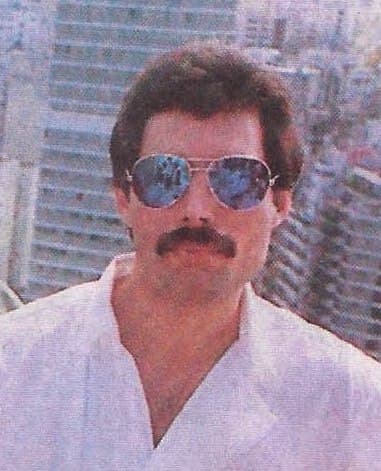
Freddie Mercury (1946–1991) was a British singer, songwriter, and the legendary lead vocalist of the rock band Queen. Born Farrokh Bulsara in Zanzibar, he became one of the most celebrated performers in rock music history. Known for his extraordinary vocal range, theatrical stage presence, and songwriting talent, Mercury helped create timeless hits such as “Bohemian Rhapsody,” “Killer Queen,” and “We Are the Champions.” His music and performances continue to inspire generations of artists and fans around the world.
 Wikimedia Commons
Freddie Mercury Biography
Biography
Early Life
Freddie Mercury was born Farrokh Bulsara on September 5, 1946, in Stone Town, Zanzibar, which is now part of Tanzania. His parents, Bomi and Jer Bulsara, were Parsis from the Indian subcontinent. During his childhood, Mercury spent several years in India, where he attended St. Peter's School in Panchgani.
He developed an interest in music at an early age and began taking piano lessons. While at school, he also formed a band with classmates, demonstrating the musical ambition that would later shape his career.
Move to England
In the late 1960s, Mercury and his family settled in England amid political changes in Zanzibar. He attended Ealing Art College in London and graduated with a diploma in graphic art and design.
His artistic education helped shape his distinctive visual style and interest in stage presentation. Before becoming a professional musician, he worked various jobs while pursuing opportunities in London's music scene.
Formation of Queen
In 1970, Mercury joined guitarist Brian May and drummer Roger Taylor to form the band Queen. Bassist John Deacon joined the following year, completing the classic lineup.
Mercury adopted the stage name Freddie Mercury and became the band's lead vocalist and one of its principal songwriters. Queen developed a distinctive sound combining hard rock, pop, progressive rock, and theatrical elements.
Rise to International Fame
Queen gained international recognition during the 1970s. Their albums and live performances attracted a growing global audience, and the band's ambitious arrangements helped distinguish it from other rock groups.
The 1975 album A Night at the Opera became a landmark in Queen's career. It featured "Bohemian Rhapsody," an innovative song that combined ballad, opera, and hard-rock sections. The track became one of the band's signature songs and remains one of the most celebrated recordings in rock history.
Famous Songs and Songwriting
Freddie Mercury wrote or co-wrote many of Queen's best-known songs. His compositions include "Killer Queen," "Somebody to Love," "We Are the Champions," and "Don't Stop Me Now."
His songwriting ranged from theatrical rock anthems to intimate ballads and energetic pop songs. Mercury was known for his musical imagination, expressive vocals, and ability to connect with audiences through both recordings and live performances.
Legendary Stage Performer
Mercury became famous for his charismatic and theatrical stage presence. He moved confidently across large stages, encouraged audience participation, and delivered powerful vocal performances.
One of Queen's most celebrated appearances was at the 1985 Live Aid concert at Wembley Stadium in London. The band's approximately 20-minute performance is widely regarded as one of the most memorable live rock performances ever staged.
Solo Career
Alongside his work with Queen, Mercury pursued solo projects. His solo album Mr. Bad Guy was released in 1985 and explored pop and dance music beyond Queen's familiar rock sound.
In 1988, he released Barcelona, a collaborative album with Spanish operatic soprano Montserrat Caballé. The title track combined rock and opera and reflected Mercury's longstanding admiration for classical vocal music.
Personal Life
Mercury was known for protecting his privacy, even as his fame grew internationally. He had a significant relationship with Mary Austin, whom he remained close to throughout his life. He later had a long-term relationship with Jim Hutton.
He was also recognized for his distinctive fashion, extravagant performances, and strong artistic individuality. His personal life and identity have been the subject of extensive public discussion and biographical work.
Illness and Death
In the late 1980s, Mercury became seriously ill with AIDS. He kept much of his health situation private while continuing to work and record with Queen.
On November 23, 1991, he publicly confirmed that he had AIDS. He died the following day, November 24, 1991, at his home in Kensington, London, at the age of 45. His death brought international attention to the AIDS crisis and the need for compassion and public awareness.
Legacy and Influence
Freddie Mercury remains one of the most influential figures in rock music. His powerful voice, bold stage persona, and genre-crossing creativity helped establish Queen as one of the world's most successful rock bands.
His life and career have inspired films, documentaries, books, tribute concerts, and generations of musicians. The 2018 film Bohemian Rhapsody, featuring Rami Malek as Mercury, introduced his story to a new generation and earned Malek an Academy Award for Best Actor.
Freddie Mercury's music continues to be performed and celebrated worldwide, securing his place as an enduring icon of popular culture.
Did you know?
Freddie Mercury designed Queen's famous crest, which features the zodiac signs of the band's four members alongside a phoenix. He studied graphic art and design before becoming a world-famous rock star.