Footballer · West Germany
Franz Beckenbauer
Franz Beckenbauer was a German football player, manager, and sports administrator, born on September 11, 1945, in Munich, Germany. Widely known as “Der Kaiser,” he revolutionized the sweeper role with his elegant defending, leadership, and ability to build attacks from the back. He captained West Germany to victory at the 1974 FIFA World Cup and later managed the national team to the 1990 World Cup title. Beckenbauer won two Ballon d'Or awards and became one of the most influential figures in German football history. He died on January 7, 2024, at the age of 78.
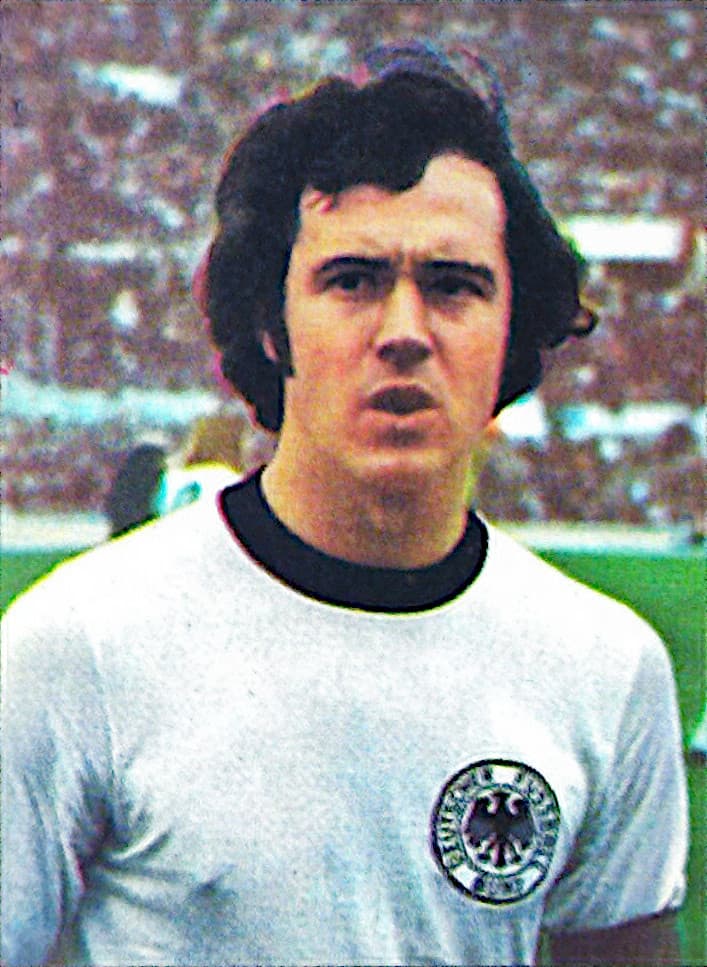 Wikimedia Commons
Franz Beckenbauer Biography
Biography
Early Life
Franz Anton Beckenbauer was born on September 11, 1945, in Munich, Germany, shortly after the end of World War II. He grew up in a working-class family and developed a passion for football during his childhood.
Despite the difficult conditions of postwar Germany, Beckenbauer pursued his ambition of becoming a professional footballer. His intelligence, confidence, and technical ability helped him stand out from an early age.
Beginning of His Football Career
Beckenbauer joined Bayern Munich's youth system in 1959. Initially developing as a forward, he gradually moved into deeper positions and became known for his ability to defend, distribute the ball, and initiate attacks.
He made his senior debut for Bayern Munich in 1964, beginning a career that would transform both the club and German football.
Bayern Munich Career
Beckenbauer became a central figure in Bayern Munich's rise to international prominence during the 1960s and 1970s. His leadership and tactical intelligence helped the club establish itself among Europe's leading teams.
With Bayern, he won four German league championships and four German Cup titles. He also captained the club to three consecutive European Cup victories from 1974 to 1976.
Revolutionizing the Sweeper Role
Beckenbauer became famous for his interpretation of the sweeper, or libero, position. Instead of concentrating only on defensive duties, he regularly carried the ball forward, created attacking opportunities, and controlled the rhythm of play from the back.
His elegant style, vision, and composure helped redefine what defenders could contribute to a team. This approach influenced generations of footballers and coaches.
Success with West Germany
Beckenbauer made his debut for the West Germany national team in 1965. He quickly became one of its most important players and helped the team reach the final of the 1966 FIFA World Cup in England, where West Germany finished as runners-up.
At the 1970 World Cup in Mexico, he played a memorable role in West Germany's campaign, including a famous semifinal against Italy that became known as the "Game of the Century."
UEFA European Championship 1972
In 1972, Beckenbauer captained West Germany to victory at the UEFA European Championship. The team defeated the Soviet Union 3–0 in the final.
The tournament established West Germany as one of Europe's strongest national teams and reinforced Beckenbauer's reputation as an outstanding leader.
Winning the 1974 FIFA World Cup
Beckenbauer's greatest achievement as a player came at the 1974 FIFA World Cup, hosted by West Germany. As captain, he guided his team through the tournament and helped secure
Did you know?
Did you know that Franz Beckenbauer is one of the few people to win the FIFA World Cup both as a player and as a manager? He lifted the trophy as West Germany's captain in 1974 and guided the national team to another World Cup victory in 1990 as manager. He also won the Ballon d'Or twice, in 1972 and 1976.