Singer · Italy
Frank Sinatra
Frank Sinatra (1915–1998) was an American singer, actor and entertainer who became one of the most influential popular music performers of the 20th century. Known for his distinctive voice and sophisticated phrasing, he recorded numerous classic songs and enjoyed a major film career. He won the Academy Award for Best Supporting Actor for *From Here to Eternity* and received the Academy's Jean Hersholt Humanitarian Award in 1971.
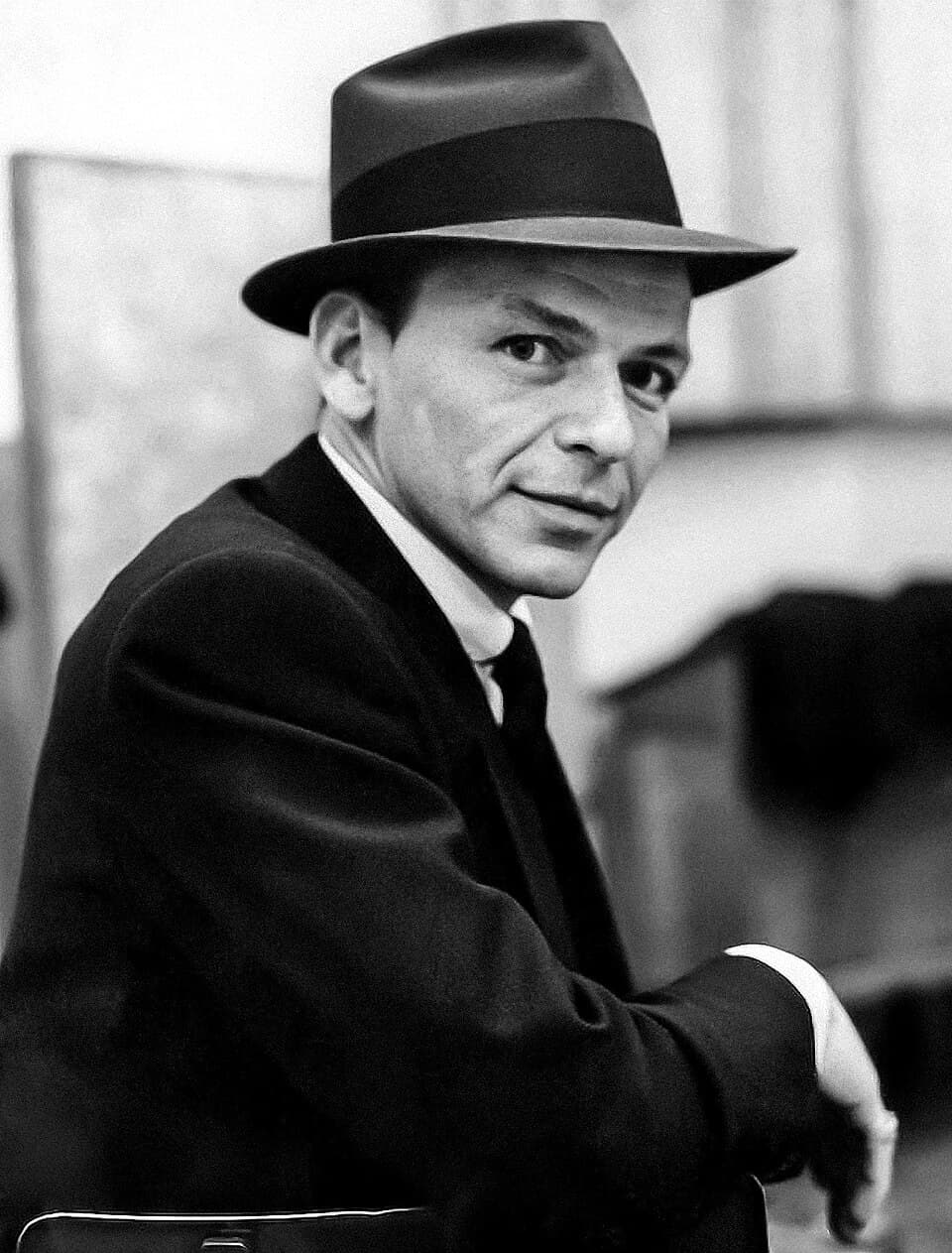 Wikimedia Commons
Biography
Frank Sinatra, whose full name was Francis Albert Sinatra, was born on December 12, 1915, in Hoboken, New Jersey, United States. He became one of the most celebrated American singers and entertainers of the 20th century, while also establishing a successful career as a film actor.
Sinatra developed an interest in music during his youth and was strongly influenced by popular singers and big-band music. He began performing locally before gaining wider attention as a vocalist with bandleaders Harry James and Tommy Dorsey. His work with Dorsey's orchestra in the early 1940s helped establish him as a major young singing star.
After leaving the orchestra, Sinatra launched a successful solo career. His performances attracted a large following, particularly among young listeners, and he became known for his controlled phrasing, interpretation of lyrics and distinctive vocal style. His career later experienced a significant resurgence, helped by a new generation of recordings and his move toward more mature material.
Sinatra also became a major Hollywood performer. His early films included Anchors Aweigh (1945), On the Town (1949) and From Here to Eternity (1953). His performance as Private Angelo Maggio in From Here to Eternity earned him the Academy Award for Best Supporting Actor at the 26th Academy Awards in 1954.
He continued acting in films such as The Man with the Golden Arm (1955), Guys and Dolls (1955), Some Came Running (1958), The Manchurian Candidate (1962) and Robin and the 7 Hoods (1964). He also became closely associated with the group of entertainers popularly known as the Rat Pack, particularly through his professional relationship with Dean Martin, Sammy Davis Jr., Peter Lawford and Joey Bishop.
As a recording artist, Sinatra worked with major arrangers including Nelson Riddle, Gordon Jenkins and Billy May. Albums such as In the Wee Small Hours, Songs for Swingin' Lovers!, Come Fly with Me and Only the Lonely became important works in American popular music. His recording of “My Way”, released in 1969, became one of his signature songs.
Sinatra's career extended across several decades. He continued recording and performing after periods of retirement, and his work remained influential among later generations of singers.
Beyond entertainment, Sinatra was involved in political and charitable activities. In 1971, the Academy honored him with the Jean Hersholt Humanitarian Award for his humanitarian contributions.
Frank Sinatra died on May 14, 1998, in Los Angeles, California, at the age of 82. His legacy includes hundreds of recordings, numerous films and a lasting influence on American popular singing and entertainment.
Did you know?
**Did You Know?** Frank Sinatra won the Academy Award for Best Supporting Actor for *From Here to Eternity* at the 1954 Oscars, adding an acting Oscar to his already successful music career.