Comedian · United States
Buster Keaton
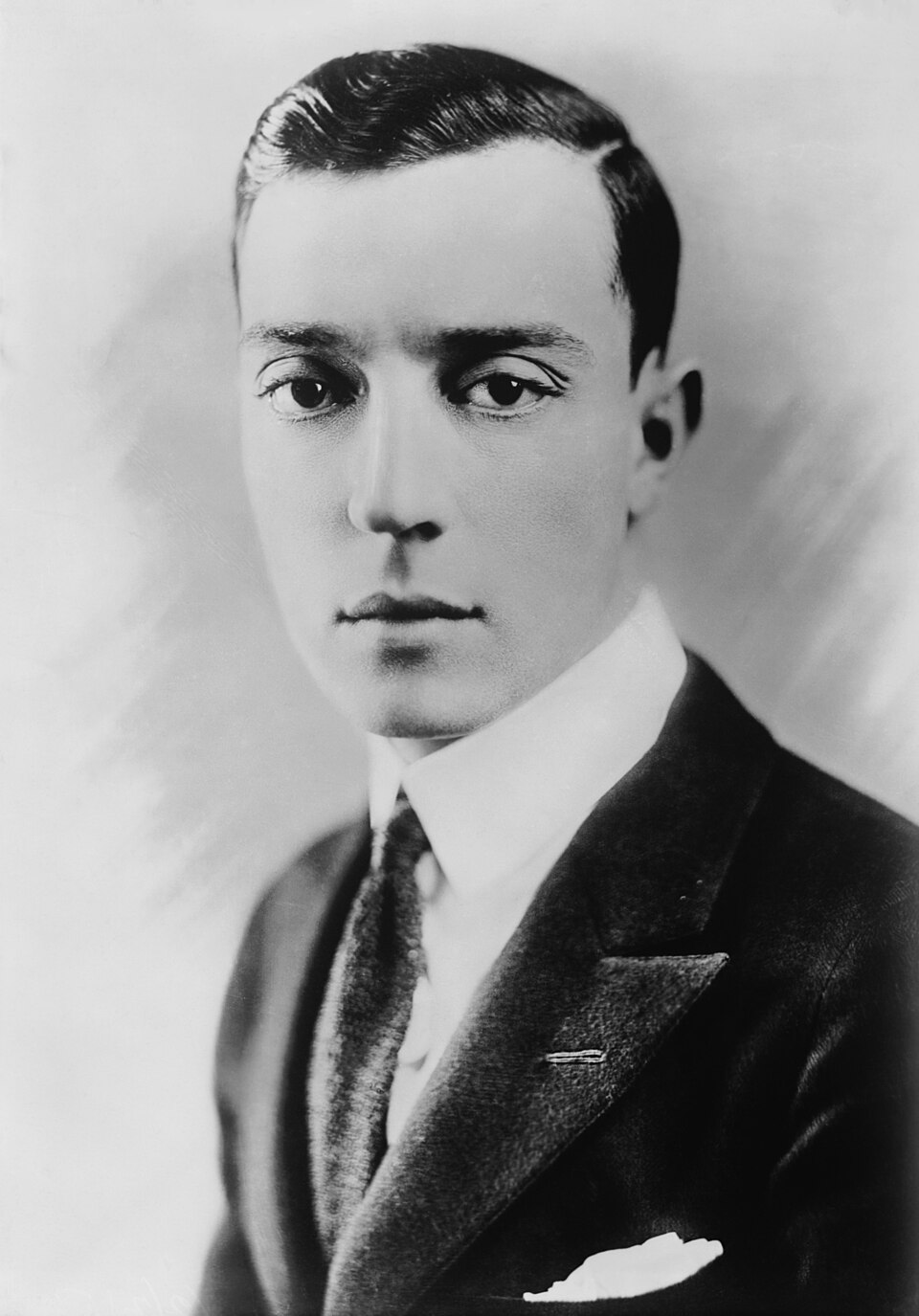
Buster Keaton was an American actor, comedian, director, and filmmaker widely regarded as one of the greatest pioneers of silent cinema. Born Joseph Frank Keaton on October 4, 1895, he became famous for his remarkable physical comedy, daring stunts, inventive filmmaking, and trademark expressionless face, which earned him the nickname “The Great Stone Face.” His celebrated films include *Sherlock Jr.*, *The General*, *Our Hospitality*, and *Steamboat Bill, Jr.* Despite career setbacks during the transition to sound films, Keaton later returned to public recognition and received an Honorary Academy Award in 1960. He died on February 1, 1966, leaving a lasting influence on comedy and filmmaking.
 Wikimedia Commons
Buster Keaton: Full Biography, Early Life, Movies, and Legacy
Biography
1. Introduction
Buster Keaton was an American actor, comedian, director, writer, and filmmaker who became one of the most influential figures in the history of silent cinema. Famous for his extraordinary physical comedy, inventive visual storytelling, and remarkably straight facial expression, he earned the nickname “The Great Stone Face.”
During the 1920s, Keaton created some of the most celebrated silent comedy films ever made, including Sherlock Jr., The General, Our Hospitality, and Steamboat Bill, Jr. He was not only a performer but also a filmmaker who helped develop innovative techniques in camera work, editing, stunt performance, and visual comedy.
Although his career experienced serious difficulties after he joined a major Hollywood studio, his films were rediscovered by later generations. Today, Keaton is remembered as a pioneer whose creativity continues to influence filmmakers and comedians around the world.
2. Early Life and Family Background
Joseph Frank Keaton, professionally known as Buster Keaton, was born on October 4, 1895, in Piqua, Kansas, United States. His parents, Joseph Hallie “Joe” Keaton and Myra Edith Cutler, were traveling vaudeville performers who entertained audiences with comedy and stage routines.
Because his parents worked in entertainment, Keaton grew up surrounded by performers, theaters, and touring shows. His childhood was very different from that of most children, as he was introduced to public performance at an exceptionally young age.
The origin of his nickname “Buster” is commonly associated with a story involving a fall during infancy or early childhood and the entertainer Harry Houdini. The exact details vary in historical accounts, but the nickname stayed with him throughout his life.
Keaton's early exposure to physical comedy and live performance shaped his approach to entertainment. He learned how to fall, move, react, and perform stunts safely enough for repeated stage appearances. These experiences later became essential to his film career.
3. Childhood Career in Vaudeville
Keaton began performing with his parents as a young child, becoming part of their family act, known as The Three Keatons. The act featured energetic physical comedy in which his father tossed him around the stage as part of the routine.
Although the performances looked rough and chaotic, they required timing, coordination, and practiced movement. Keaton learned how to turn apparent accidents into comic moments while maintaining a controlled expression.
He also observed other entertainers and developed skills in dance, improvisation, mimicry, and stagecraft. His childhood on the vaudeville circuit provided an unusual practical education in performing for live audiences.
Keaton's serious expression became one of his most recognizable characteristics. While other comedians frequently exaggerated their facial expressions, he often responded to absurd situations without changing his expression. This contrast became a defining element of his comedy.
4. Education and Early Development
Keaton received very little formal schooling because of his demanding childhood performance schedule. Much of his education came from traveling, observing other performers, and learning the practical requirements of show business.
He developed an understanding of physical movement, rhythm, timing, and visual storytelling through years of stage work. These skills later helped him design comedy sequences that relied on action rather than dialogue.
His limited classroom education did not prevent him from becoming an inventive filmmaker. Instead, his practical experience gave him a distinctive perspective on how audiences responded to movement, surprise, danger, and visual jokes.
5. Entry into the Film Industry
In 1917, Keaton entered the film industry after meeting comedian and filmmaker Roscoe “Fatty” Arbuckle. Arbuckle invited him to appear in the silent comedy The Butcher Boy.
Keaton quickly became interested in the filmmaking process. He explored cameras, editing, staging, and the technical methods used to create screen comedy. His background in vaudeville made him comfortable performing physical routines, while his curiosity encouraged him to experiment behind the camera.
He worked with Arbuckle in several short comedies and developed his screen presence. Their professional partnership provided Keaton with valuable experience before he began producing films under his own creative direction.
Keaton's early film work marked the beginning of a career that would eventually establish him as both a major comedian and an influential director.
6. Establishing His Own Film Career
By 1920, Keaton had begun making films independently. This period allowed him greater creative control over his performances and productions.
His early short films included One Week (1920), a comedy about a newly married couple struggling with a prefabricated house; The Playhouse (1921), which explored multiple-character visual effects; and Cops (1922), featuring an increasingly chaotic chase through a city.
These films showcased Keaton's ability to build elaborate comic situations around everyday objects and environments. Houses, trains, bicycles, streets, and machinery became central parts of the action.
Rather than relying exclusively on verbal jokes, Keaton used precise movement, carefully planned stunts, unexpected reversals, and visual surprises. His films demonstrated that physical comedy could be both entertaining and technically sophisticated.
7. Major Silent Films
Our Hospitality (1923)
Our Hospitality was one of Keaton's early feature-length comedies. Set partly in the American South, the film combined a romantic storyline with a family feud and elaborate physical sequences.
The production demonstrated his increasing ability to sustain a story across a feature-length film while retaining the visual precision of his short comedies.
Sherlock Jr. (1924)
Sherlock Jr. is widely regarded as one of Keaton's most innovative films. He played a movie projectionist who dreams of becoming a detective and appears to enter the film he is watching.
The movie features imaginative editing, visual illusions, and sequences that blur the distinction between reality and the screen. Its creative use of cinematic space influenced later filmmakers interested in dreams, fantasy, and the relationship between audiences and movies.
The Navigator (1924)
In The Navigator, Keaton played a wealthy young man who becomes stranded aboard a large ship with a woman. Much of the comedy comes from the pair's attempts to operate the vessel and cope with unfamiliar surroundings.
The film highlights Keaton's ability to transform an ordinary environment into a setting for inventive physical comedy.
Seven Chances (1925)
Seven Chances follows a man who must marry before a deadline to inherit a fortune. The film is famous for its escalating chaos, especially a sequence in which Keaton is pursued by a large crowd of brides.
Its elaborate chase scenes remain among the most recognizable examples of silent-era physical comedy.
The General (1926)
The General is one of Keaton's best-known films. Set during the American Civil War, it follows a railway engineer who attempts to recover his stolen locomotive and rescue the woman he loves.
Keaton directed and starred in the production, which featured elaborate railway sequences and dangerous physical stunts. Although the film was not an immediate commercial triumph, its reputation grew substantially over time.
It is now widely regarded as a major achievement in silent cinema because of its combination of comedy, action, visual storytelling, and technical ambition.
Steamboat Bill, Jr. (1928)
In Steamboat Bill, Jr., Keaton played a young man who returns to his father's riverboat business and becomes caught up in a rivalry and a powerful storm.
The film contains one of his most famous stunts: the facade of a building falls around him, leaving him unharmed because he stands precisely where an open window lands. The sequence illustrates the careful planning and accuracy that characterized his physical performances.
The Cameraman (1928)
The Cameraman follows a photographer who tries to become a newsreel cameraman while pursuing a romantic interest. The film combines comedy about the emerging film industry with an affectionate portrayal of the challenges of learning a profession.
It was among Keaton's final major silent features and remains an important example of his filmmaking style.
8. Signature Style and Dangerous Stunts
Keaton's approach to comedy was distinctive because he combined a calm expression with highly physical action. While his characters frequently encountered disasters, he often reacted with apparent composure.
His style depended on several elements:
- Deadpan expression: His nearly unchanged facial expression made absurd situations even funnier.
- Physical precision: His falls, jumps, chases, and movements were carefully timed.
- Visual storytelling: He communicated ideas through action, composition, and editing rather than relying on dialogue.
- Mechanical ingenuity: He used buildings, vehicles, machines, and everyday objects to create elaborate comic situations.
- Realistic staging: Many stunts were performed physically in front of the camera rather than created entirely through special effects.
Keaton was known for performing many of his own stunts, some of which involved significant danger. His work required careful preparation and coordination, although the physical risks were real and could result in injury.
His filmmaking demonstrated that comedy could depend on both performance and engineering. The environment itself often became an active part of the joke.
9. Transition to Sound Films and Career Difficulties
By the late 1920s, Hollywood was transitioning from silent films to movies with synchronized sound. In 1928, Keaton signed with Metro-Goldwyn-Mayer, commonly known as MGM.
The move brought access to major studio resources but reduced his creative independence. At his independent studio, Keaton had exercised substantial control over writing, directing, staging, and production. Under MGM, many of those decisions were controlled by studio executives and production teams.
His sound-era films included The Hollywood Revue of 1929, Free and Easy (1930), and Parlor, Bedroom and Bath (1931). Although he continued to work, his films increasingly differed from the productions that had established his reputation.
Personal difficulties also affected this period of his life. His marriage to Natalie Talmadge ended, and he struggled with alcohol dependence. MGM terminated his contract in 1933.
The combination of reduced creative control, personal challenges, and changes in the film industry made this one of the most difficult periods of his career.
10. Personal Life and Family
Keaton married actress Natalie Talmadge in 1921. They had two sons, Joseph and Robert. Their marriage deteriorated during the late 1920s and ended in divorce in the early 1930s.
In 1933, he married Mae Scriven, a nurse. This marriage also ended in divorce during the 1930s.
In 1940, Keaton married Eleanor Norris, a dancer who became his partner and companion for the remainder of his life. Their marriage lasted until his death in 1966.
Despite the hardships he experienced, Keaton continued working in entertainment. His later years included film appearances, television work, live performances, and renewed recognition for his silent-era achievements.
11. Comeback and Later Career
Keaton gradually returned to public attention during the 1940s and 1950s. As film critics and audiences began reassessing silent cinema, his technical achievements and comic performances received renewed appreciation.
He appeared in Billy Wilder's Sunset Boulevard (1950), playing a fictionalized version of himself among a group of former silent-film stars. He also appeared in Charlie Chaplin's Limelight (1952), sharing the screen with Chaplin in a notable meeting of two major comedy figures.
Keaton continued to work in television, advertisements, and supporting film roles. His skills remained valuable because his physical comedy and screen presence did not depend on spoken dialogue alone.
He also participated in the preservation and rediscovery of his earlier films. As audiences watched his silent features again, his reputation grew beyond that of a performer associated only with an earlier era.
12. Awards and Recognition
Keaton's achievements were increasingly recognized during his later life and after his death.
His major honors include:
- Honorary Academy Award: Presented in 1960 in recognition of his unique talents and contributions to film comedy.
- Hollywood Walk of Fame: He received stars recognizing his contributions to motion pictures and television.
- George Eastman Award: He was among the early recipients of this recognition for significant contributions to motion pictures.
- Film preservation recognition: Several of his silent films have been selected for preservation in the United States National Film Registry.
- Continuing critical recognition: Film historians and critics have repeatedly praised his direction, physical performances, and innovations in visual storytelling.
These honors reflect the lasting importance of his work to the development of cinema.
13. Final Years and Death
Keaton continued performing into the final years of his life. Even after the peak of his silent-film career had passed, he remained active in movies and television.
He appeared in Film (1965), a short experimental movie based on a screenplay by Samuel Beckett. The project reflected his willingness to participate in unusual and intellectually ambitious work late in his career.
Keaton died of lung cancer on February 1, 1966, in Los Angeles, California. He was 70 years old. His death marked the end of a career that had spanned stage performance, silent cinema, sound films, television, and live entertainment.
14. Influence on Comedy and Filmmaking
Keaton's influence extends well beyond the silent-film era. His work helped establish visual comedy as a sophisticated form of cinematic storytelling.
He demonstrated how filmmakers could create humor through camera placement, editing, physical timing, and the relationship between a character and the surrounding environment. His stunts and visual ideas continue to be studied by filmmakers and film students.
His work has also influenced comedians who use physical movement, minimal facial expression, and carefully constructed visual situations. His films are frequently discussed alongside those of Charlie Chaplin and Harold Lloyd as defining examples of silent comedy.
Keaton's ability to combine humor with moments of vulnerability and perseverance also gives his films an emotional quality that goes beyond slapstick.
15. Legacy
Buster Keaton remains one of the most important artists in the history of film comedy. His best-known films continue to attract viewers because their humor depends on visual ideas and human reactions rather than language alone.
His creative independence during the 1920s allowed him to develop a distinctive cinematic style. Although he faced significant difficulties during the studio era, later audiences and critics rediscovered the originality of his work.
The preservation and restoration of his films have helped make his achievements accessible to new generations. His legacy survives in film history, comedy performance, stunt design, editing, and visual storytelling.
16. Conclusion
Buster Keaton was more than a silent-film comedian. He was a performer, director, writer, and technical innovator who expanded the possibilities of visual comedy.
Through films such as Sherlock Jr., The General, and Steamboat Bill, Jr., he demonstrated how carefully designed action and a seemingly expressionless face could produce extraordinary humor and emotional depth.
His career experienced both remarkable success and difficult setbacks, but his contribution to cinema endured. Today, Buster Keaton is remembered as a pioneering filmmaker whose creativity continues to inspire audiences and artists around the world.
Did you know?
- Buster Keaton was born Joseph Frank Keaton on October 4, 1895, in Piqua, Kansas. - His nickname “Buster” is traditionally linked to a story involving a childhood fall and entertainer Harry Houdini. - He began performing with his parents in vaudeville when he was very young. - His trademark straight face earned him the nickname “The Great Stone Face.” - Keaton performed many of his own stunts, including some remarkably dangerous physical sequences. - *Sherlock Jr.* is famous for its inventive visual effects and scenes involving a movie screen. - *The General* was not a major commercial success at first, but it later became one of his most celebrated films. - He appeared alongside Charlie Chaplin in *Limelight* (1952). - He received an Honorary Academy Award in 1960 for his contribution to film comedy. - Keaton's career spanned silent movies, sound films, television, and live performance.